In Berlin

The deportations began in the city: in apartments, factories, a synagogue, an old people's home.

Jewish Berlin

The people deported from Berlin belonged to the largest Jewish community in Germany. These photographs show the city they lived in, and how persecution closed in on them.

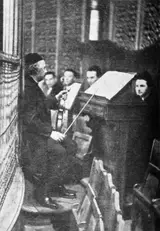
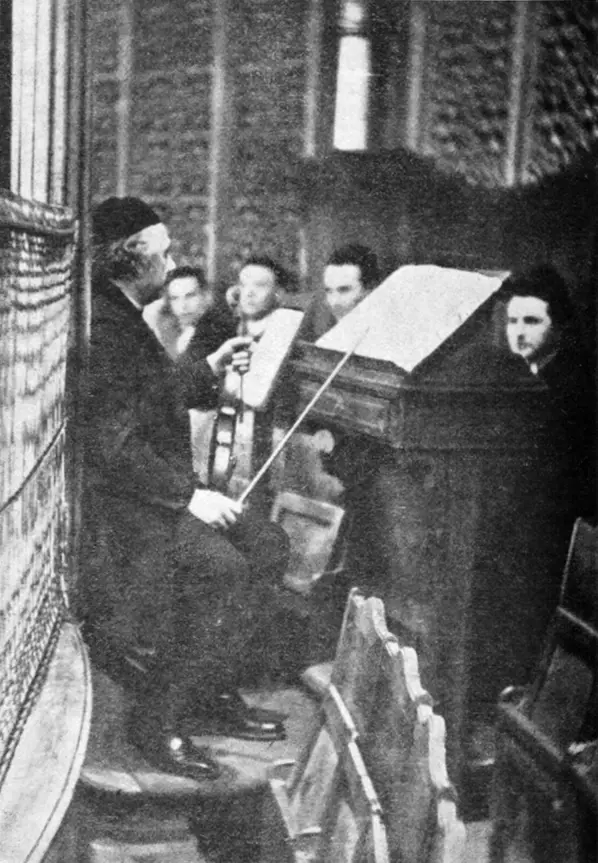
Albert Einstein at a charity concert in the Neue Synagoge, 1930
Albert Einstein playing the violin at a charity concert in the Neue Synagoge, Oranienburger Straße, on 29 January 1930 (published 12 February 1930).
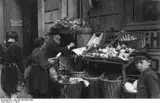
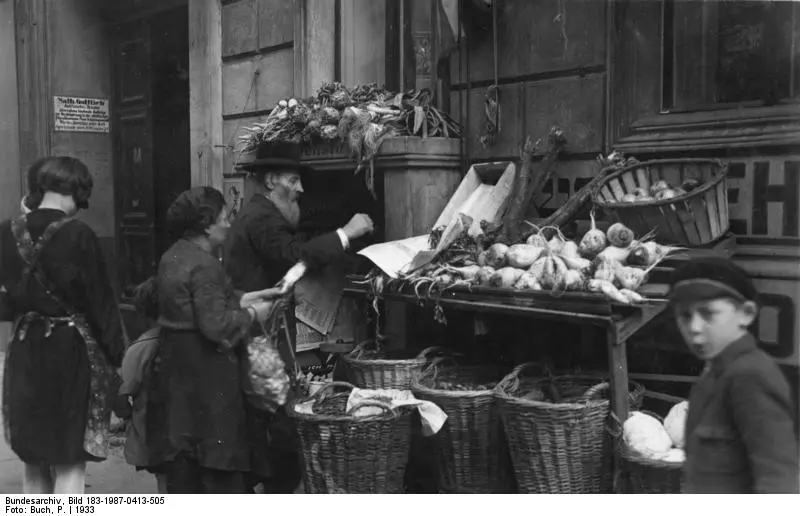
Market stall in Grenadierstraße, 1933
A Jewish trader's stall in Grenadierstraße (today Almstadtstraße) in the Scheunenviertel, 1933, photographed by P. Buch.
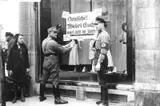
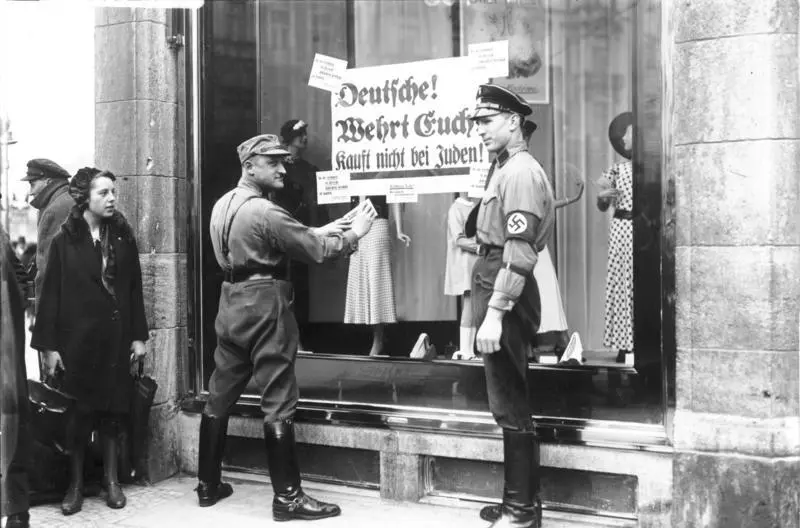
Boycott of Jewish shops, 1 April 1933
Perpetrator photograph.SA men put up posters reading "Deutsche! Wehrt Euch! Kauft nicht bei Juden!" on the window of a Jewish-owned shop in Berlin, 1 April 1933; press photograph by Georg Pahl.
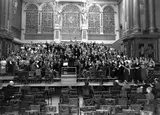
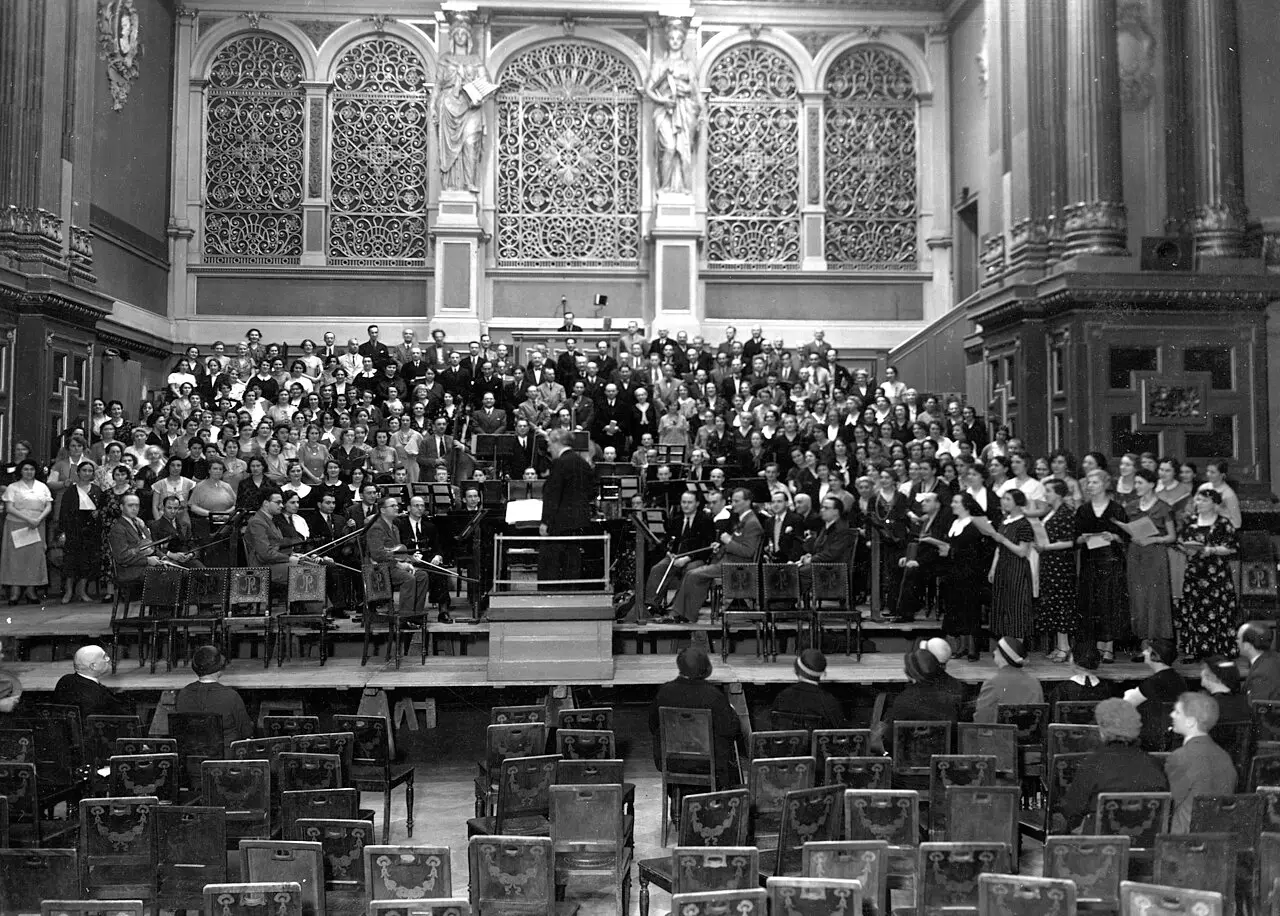
Kulturbund orchestra rehearsing "Judas Maccabaeus", 1934
Kurt Singer conducts the orchestra and choir of the Kulturbund Deutscher Juden in a rehearsal of Handel's "Judas Maccabaeus" in the old Philharmonie on Bernburger Straße, for the performances of 7 and 8 May 1934.
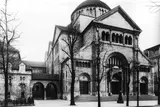
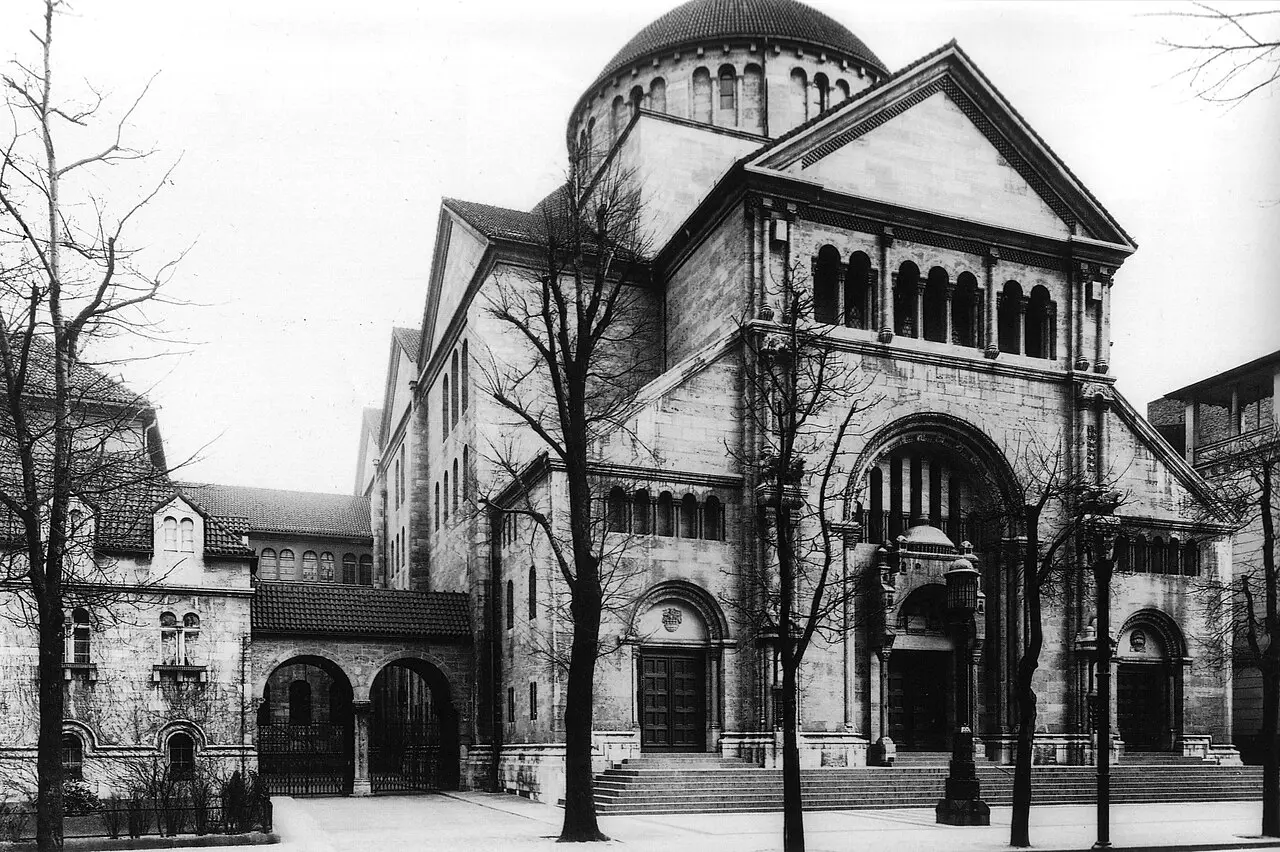
Synagogue in Fasanenstraße, before 1938
The synagogue in Fasanenstraße, Charlottenburg (Ehrenfried Hessel, 1910–1912), photographed by Waldemar Titzenthaler (1869–1937), undated (1910s or 1920s). It was set on fire in the November pogrom of 1938.
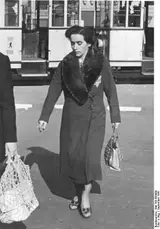
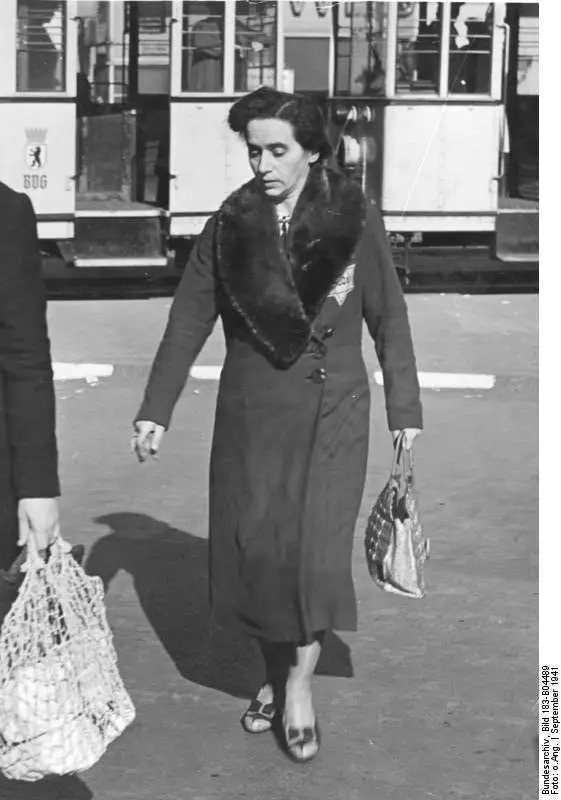
Woman wearing the yellow star, Berlin, September 1941
Perpetrator photograph.A woman wearing the yellow star on a Berlin street, September 1941. From 19 September 1941 every Jewish person in Germany over the age of six was forced to wear it. The photograph was taken for the Nazi press; her name is not recorded.

The stations

The Gestapo sent the transports from three Berlin stations; the Reichsbahn provided the trains.

Anhalter Bahnhof

Askanischer Platz 6, Berlin-Kreuzberg (portico ruin), 2 June 1942 – March 1945

116 documented transports, 9,580 people

The Anhalter Bahnhof in Kreuzberg, a monumental brick terminus built in 1876–1880 to designs by Franz Heinrich Schwechten, had connections to the south and was therefore used for the so-called "Alterstransporte" ("old people's transports") to Theresienstadt. The first of these left on 2 June 1942. Unlike the freight-wagon transports from Moabit, these deportations used the regular timetable: as a rule two special third-class carriages were coupled to the scheduled early-morning train to Dresden or Prague, departing at 6:07 a.m. from platform 1. Each transport usually comprised 50 or 100 people. The deportees, predominantly older and elderly women and men, had been brought from a "Sammelstelle" to the station early in the morning by tram or truck.

According to the memorial plaque and the Friedrichshain-Kreuzberg Museum, 116 transports with more than 9,600 people left the Anhalter Bahnhof, and by the end of March 1945 more than 15,000 Berlin Jews in all had been deported to Theresienstadt. Another account (the Gedenktafeln in Berlin entry on the Levetzowstraße memorial) gives 14,797 people deported to Theresienstadt in 117 transports via the Anhalter Bahnhof between 6 June 1942 and 27 March 1945. Theresienstadt was presented as a destination for the elderly, but it was a transit camp: many of the deportees died there of disease and exhaustion, and many others were deported further "to the East", most often to Auschwitz.

Only the portico ruin of the station survives, a listed monument preserved after the 1960 demolition following public protest; since 27 January 2008 a free-standing stainless-steel plaque beside it commemorates the deportations to Theresienstadt.

More about this memorial

Sources
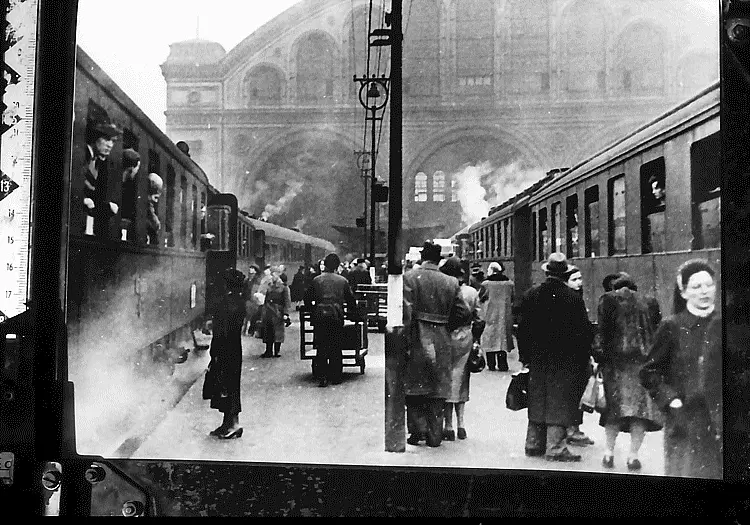
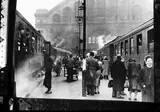
Anhalter Bahnhof platforms, 1942
Trains ready to depart in the train shed of the Anhalter Bahnhof, photographed by Willy Pragher; the Landesarchiv Baden-Württemberg dates the negative to 1942. The image shows ordinary passenger traffic.

Bahnhof Grunewald

Am Bahnhof Grunewald, 14193 Berlin (Charlottenburg-Wilmersdorf), From 18 October 1941; main departure station until about spring 1942, with later transports according to the district office until January 1945

10 documented transports, 10,341 people

Bahnhof Grunewald, a suburban station on Berlin's western edge, was where the systematic deportation of Berlin's Jews began. On 18 October 1941 the Reich Security Main Office, working with the Reich Transport Ministry, started the deportations: that day a special train left Grunewald with 1,013 Jews bound for the ghetto in Litzmannstadt (Łódź). Police and SS had assembled the transport in the "Sammellager" set up in the Levetzowstraße synagogue in Moabit and then drove most of the men, women and children on foot to Grunewald. The first special trains were made up of older passenger carriages; from 1942 the Reichsbahn increasingly supplied freight wagons.

According to the memorial portal of the Stiftung Denkmal für die ermordeten Juden Europas, transports left Grunewald from autumn 1941 until probably spring 1942, after which most departed from the Moabit freight yard. A 2006 research report by Diana Schulle, Klaus Dettmer and Alfred Gottwaldt established that Moabit, not Grunewald as long assumed, was the station most used for deportations from Berlin. Figures for Grunewald therefore vary: Berlin's official city portal speaks of roughly 10,000 people deported from here between autumn 1941 and spring 1942, while the Charlottenburg-Wilmersdorf district office states that about 35 trains carrying some 17,000 Jews left Grunewald for Auschwitz alone, and that the last train from here went to Sachsenhausen on 5 January 1945. The district office's text still describes the more than 50,000 deported Berlin Jews as having left "predominantly" from Grunewald, a view later research has revised.

Several memorials stand at the station: two plaques from 1987, Karol Broniatowski's concrete wall with hollowed-out human silhouettes near the entrance (unveiled 18 October 1991), and Deutsche Bahn's "Gleis 17" memorial on the former deportation platform, opened on 27 January 1998.

More about this memorial

Sources
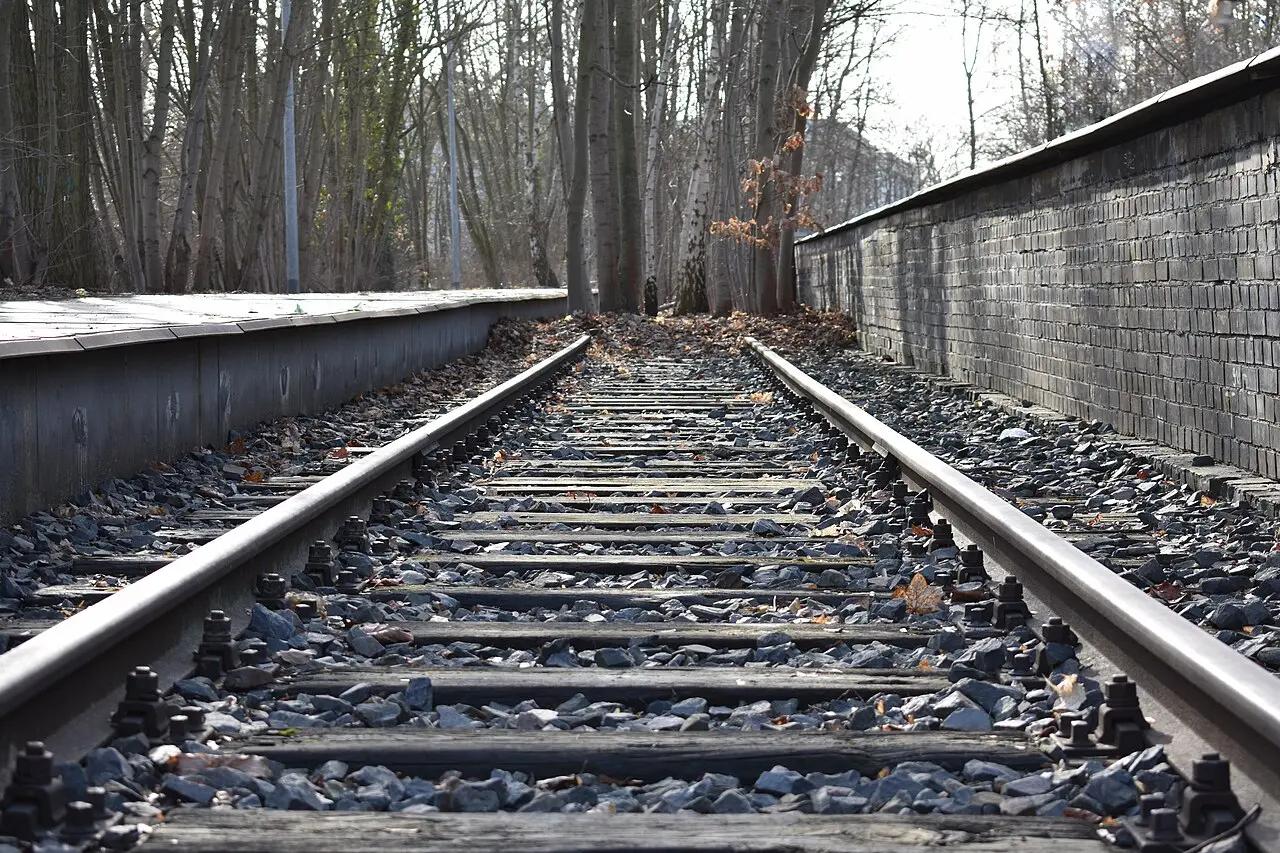
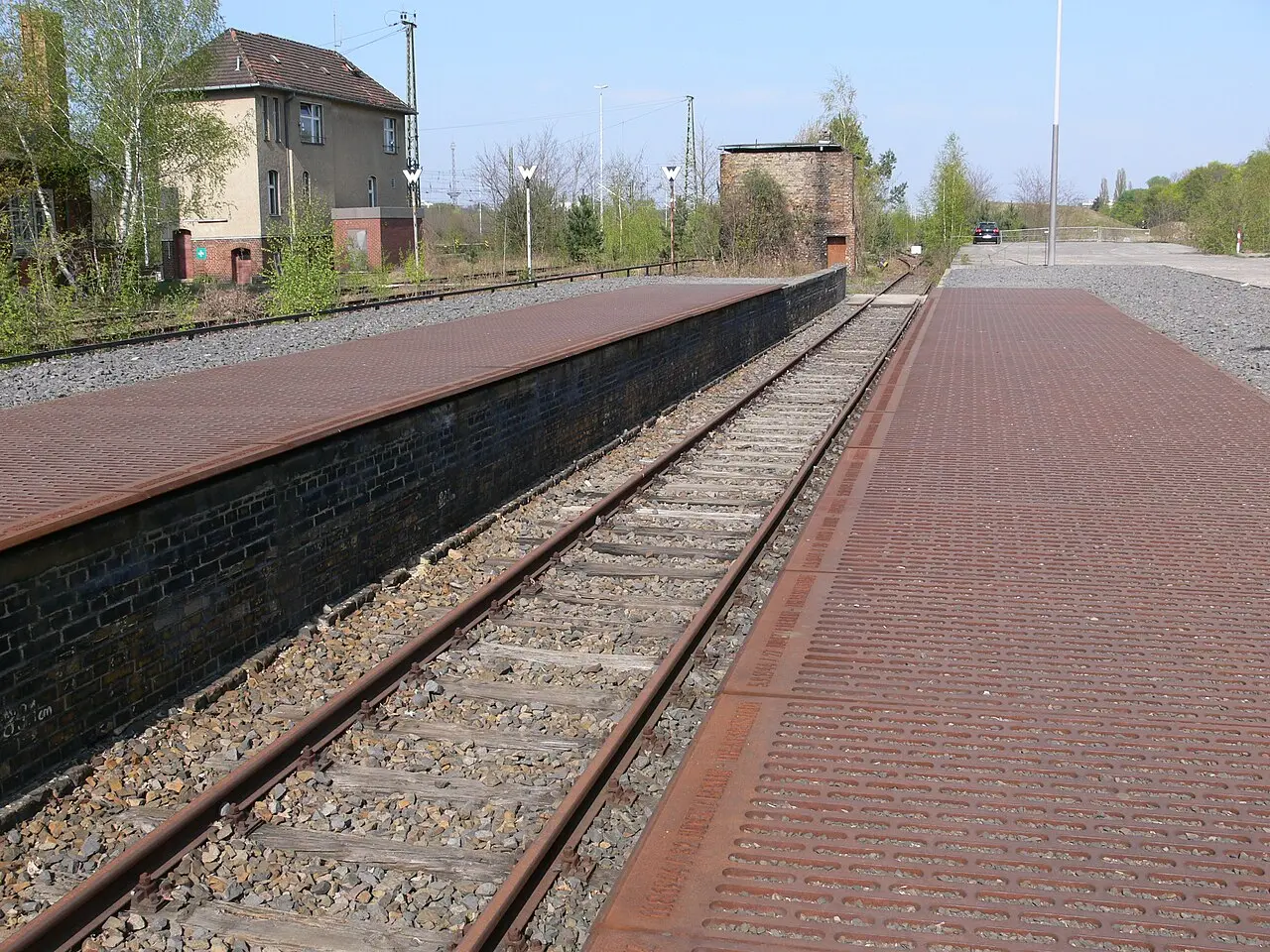
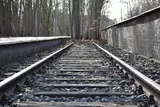
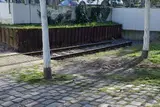
Gleis 17: the preserved track in winter
The preserved track of platform 17 at Bahnhof Grunewald between the memorial's steel-plate platform edge (left) and the old brick retaining wall, February 2021.

Güterbahnhof Moabit

Former yard entrance at Quitzowstraße; memorial site on Ellen-Epstein-Straße, 10559 Berlin (Moabit), 1942 – January 1944 (start dated variously from late March to August 1942)

34 documented transports, 29,603 people

The Moabit freight yard became the principal departure point for deportation trains from Berlin. The memorial portal of the Stiftung Denkmal für die ermordeten Juden Europas states that most transports probably left from Moabit from the end of March 1942, and at the latest from August 1942; the Berlin-Mitte district office dates its use from March 1942 to January 1944. The trains departed from the yard's so-called military tracks 69, 81 and 82, in passenger coaches at times but mostly in freight wagons. Deportations took place here on more than 60 days, and destinations included Theresienstadt, Riga, Raasiku and Auschwitz.

Many of those deported had first been held in the "Sammellager" in the Levetzowstraße synagogue, only about two kilometres away. Police and SS forced them through the streets of Moabit, on foot or by truck, to the yard entrance on Quitzowstraße, and from there along a paved path to the loading tracks, where they were crowded into the wagons. Estimates of the number of people deported from Moabit range from more than 30,000 (the Stiftung Denkmal portal and the 2007 memorial stele) to more than 32,000 (Berlin-Mitte district office and the memorial's own website). A 2006 research report by Diana Schulle, Klaus Dettmer and Alfred Gottwaldt established that Moabit, rather than Grunewald as had long been assumed, was the station most used for deportations from Berlin.

The Gedenkort Güterbahnhof Moabit, opened on 16 June 2017, preserves the paved path from Quitzowstraße, a fragment of track 69 and remains of the ramp; since 1987 Volkmar Haase's deportation memorial on the nearby Putlitzbrücke has also overlooked the former yard.

More about this memorial

Sources
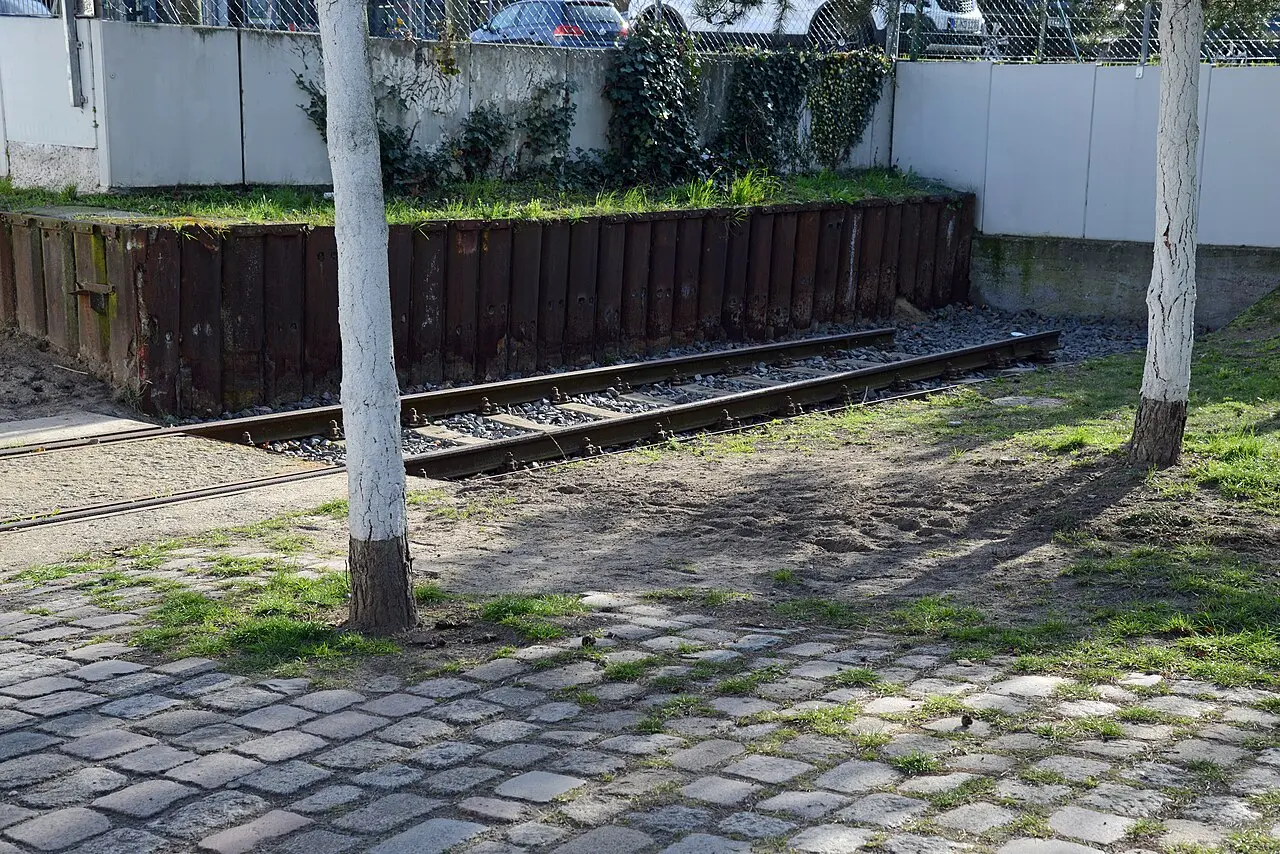
Track 69 and ramp, Gedenkort Güterbahnhof Moabit
The preserved fragment of track 69 and remains of the loading ramp at the Gedenkort Güterbahnhof Moabit, Ellen-Epstein-Straße, March 2024. Most deportation trains from Berlin left from the tracks of this freight yard.

The assembly camps

Before each transport, the Gestapo and police took people from their homes or workplaces and held them in assembly camps ("Sammellager"), often for days.

Konzerthaus "Clou" (Mauerstraße)

Zimmerstraße 90–91 / Mauerstraße 82, Berlin-Mitte (surviving front building on Zimmerstraße), 28 February – 4 March 1943

The building complex on Zimmerstraße was built in 1886 as Markthalle III; after its courtyard buildings were converted, the Konzerthaus Clou opened there in 1910 and, with 4,000 places, was then Berlin's largest dance hall. From 1927 the NSDAP used it for mass events, and the Gestapo later used its cellars for interrogations. In July 1940 the "Reichsführer-SS" listed the Clou among ten inner-city venues where dancing was expressly permitted for SS members; by February 1943 it had closed.

During the "Fabrikaktion" the Gestapo turned the hall into a provisional "Sammellager", designated "Lager IV", from 28 February to 4 March 1943; it held mainly people seized in the southern districts of the city. According to Akim Jah's reconstruction from the transport lists, 1,245 people were held here: 1,233 of them were deported to Auschwitz with the 33rd "Osttransport" on 3 March 1943 and the remaining 12 the following day. Prisoners spent only a few days in the improvised "Fabrikaktion" camps, where conditions were catastrophic even compared with Große Hamburger Straße; employees of the Jewish Community had to serve as "Ordner" and provide care.

Most of the complex was destroyed in the war. The surviving front building on Zimmerstraße stood beside the Berlin Wall from 1961 to 1990.

A memorial plaque on the surviving front building at Zimmerstraße 90–91, unveiled on 12 April 2001, recalls the history of the Clou, including its use as a "Sammellager" for Jewish forced labourers in February 1943.

More about this memorial

Sources
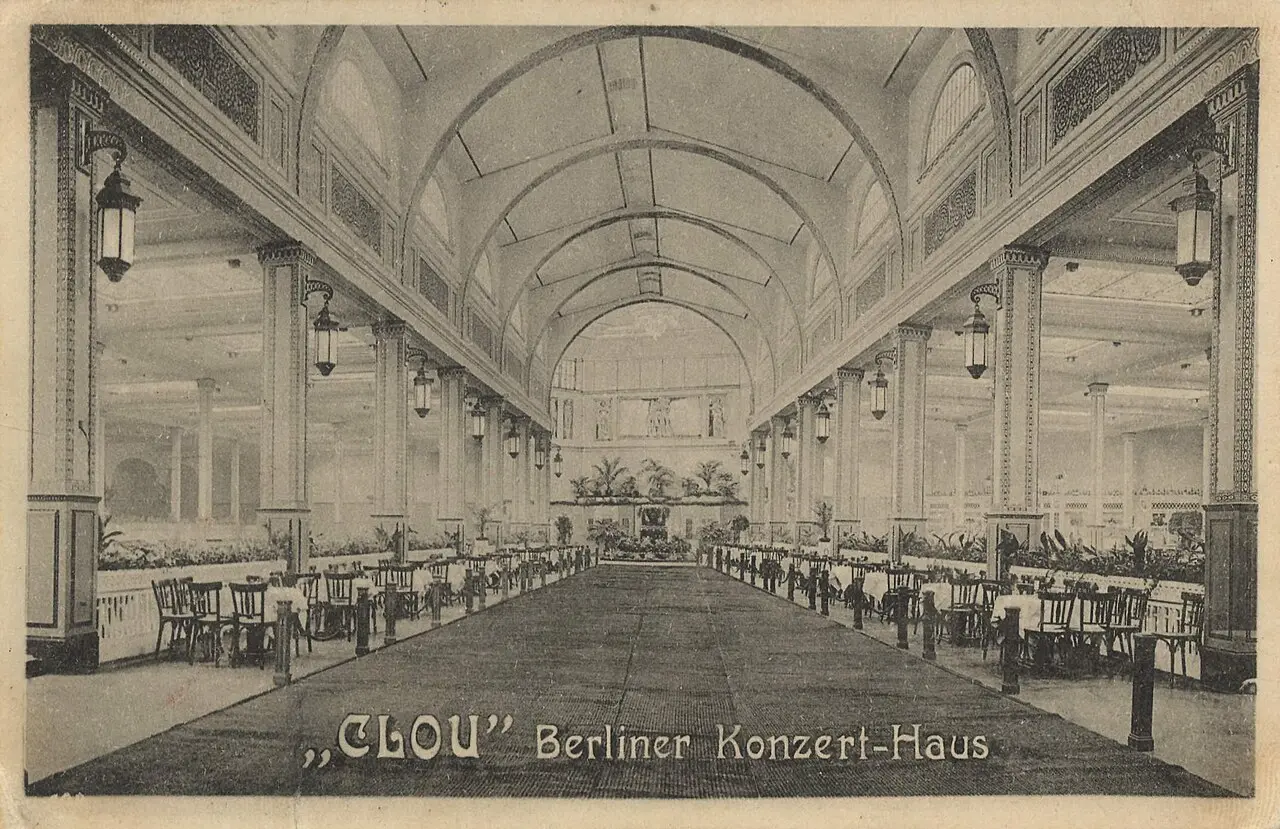
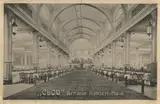
The "Clou" concert hall, 1911
Interior of the "Clou" Berliner Konzert-Haus on Mauerstraße, picture postcard published by Paul Kaufmann, Wilmersdorf-Berlin, 1911.

Jüdisches Altersheim Gerlachstraße 18–21 ("Sammellager")

Former Gerlachstraße 18–21, Berlin-Mitte, near Alexanderplatz; the site now lies within the grounds of the Haus der Statistik (Otto-Braun-Straße 70–72 / Karl-Marx-Allee / Berolinastraße), August 1942 – March 1943

The old-age home at Gerlachstraße 18–21, near Alexanderplatz, was opened in 1931 by the Jüdisches Altersheim für die Provinzen Brandenburg und Grenzmark e.V. In August, September and October 1942 the Gestapo organised three "Große Alterstransporte" of about 1,000 people each to Theresienstadt. Because the camp at Große Hamburger Straße could not hold so many people, it designated eight Jewish homes as provisional "Sammellager", among them Gerlachstraße. With the first of these transports, on 17 August 1942, 201 people were deported from Gerlachstraße – residents of the home as well as people brought in from elsewhere – and the home was used again for the transports of 14 September and 3 October 1942.

After Alois Brunner's arrival in Berlin, the buildings at nos. 19–21 became the assembly point for the "Alterstransporte" to Theresienstadt. On 16 November 1942 the Gestapo ordered the Jewish Community to prepare rooms for ten to twelve people each and to fit bars to their windows; the first transport processed here in this phase was the 74th "Alterstransport" of 19 November 1942. Those deported included residents of the home who had not been taken in the earlier transports. An undated Community list, probably from March 1943, names 14 employees working there as "Ordner". The home was used as a "Sammellager" for the last time, at the latest, for the 4th "Großer Alterstransport" on 17 March 1943, and from 1 May 1943 the property passed to the Nazi welfare organisation (Nationalsozialistische Volkswohlfahrt). Akim Jah counts at least 1,141 people who were processed there for deportation.

The neighbourhood was destroyed by bombing; the home was demolished in 1970 to make way for the Haus der Statistik. A 2025 motion in the Berlin House of Representatives describes the home as having been misused as a collection point for deportations from 1942 to 1944 – a longer period than Jah's archival reconstruction, which documents its use between August 1942 and March 1943.

There is no permanent memorial yet. Since 2020 the artist Stein Wexler and local residents have maintained a temporary plaque with a sound installation of the names of those deported from here (repeatedly vandalised), exhibition walls were set up on the home's former footprint in Berolinastraße in 2022 and 2024, and in September 2023 the Mitte district assembly resolved that a memorial installation be created as part of the Haus der Statistik redevelopment.

Sources
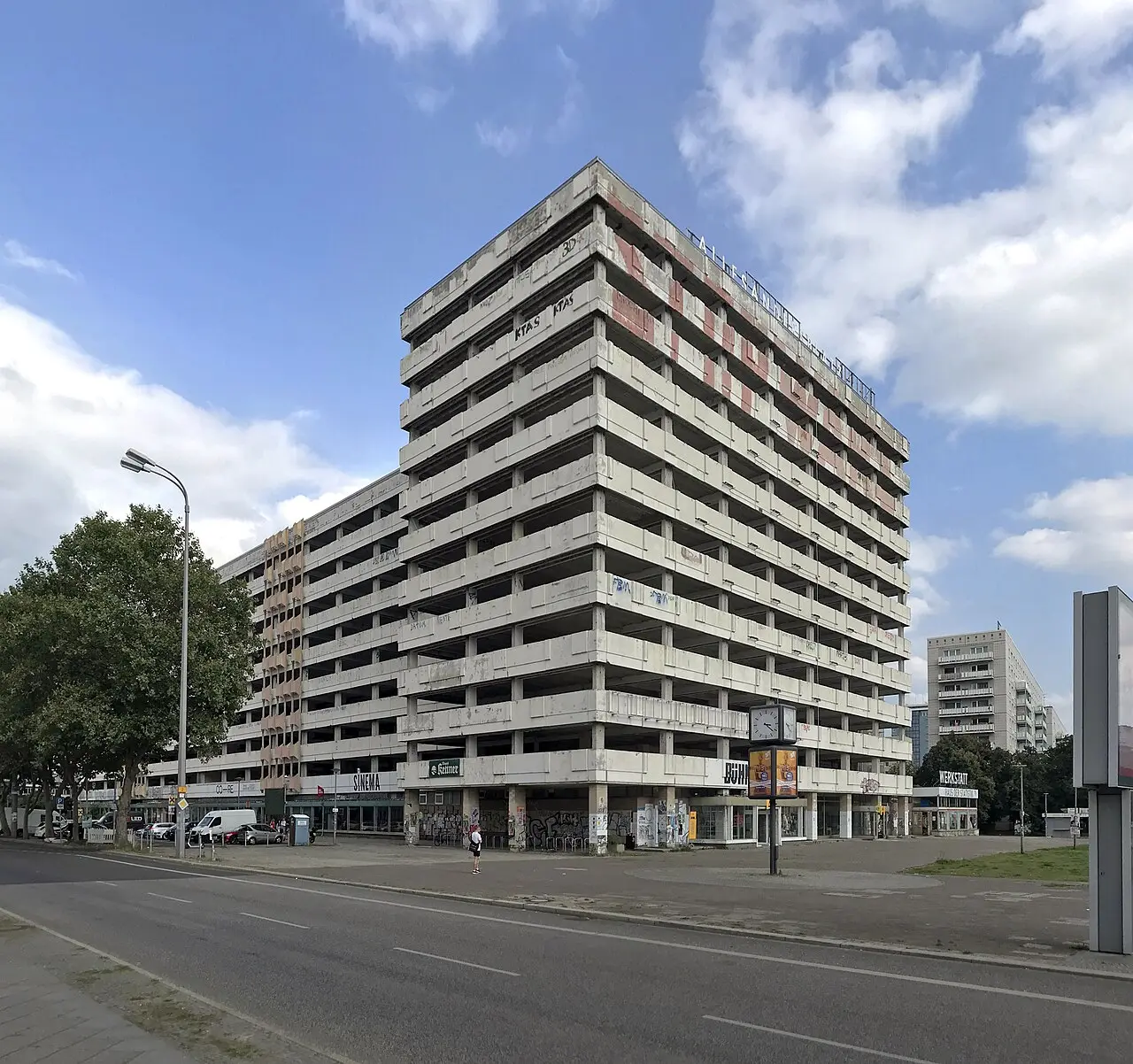
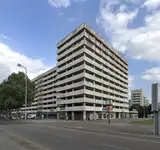
Haus der Statistik, on the former Gerlachstraße
The Haus der Statistik near Alexanderplatz (built 1968–1970), September 2021. The former Gerlachstraße and the Jewish old-age home at Nos. 18–21 lay within today's grounds of this complex; nothing of them survives.

Jüdisches Altersheim Große Hamburger Straße 26 ("Sammellager")

Große Hamburger Straße 26, Berlin-Mitte, beside the old Jewish cemetery; the building no longer stands, June 1942 – March 1944

The Jewish Community's old-age home at Große Hamburger Straße 26, next to the old Jewish cemetery, had existed since 1844. When the transports to Theresienstadt began in early June 1942, the Berlin Gestapo turned it into a second "Sammellager". Most of the home's own residents were among the first victims, deported with the 1st and 2nd "Alterstransporte" on 2 and 4 June 1942; afterwards the building was used to process the "Alterstransporte" of 50 or 100 people each to Theresienstadt. The home's staff had to assist the Gestapo with the preparations, and Kriminaloberassistent Walter Dobberke of the Gestapo's "Judenreferat" took charge of the camp.

In early November 1942 Alois Brunner, a close associate of Adolf Eichmann, was sent from Vienna to Berlin. Until the end of January 1943 he and the SS men under him ran the Berlin deportations from headquarters in this building; under his command the round-ups were made harsher and the home was turned into a mass camp – furniture was cleared to make room for more than 1,000 prisoners and further windows were barred. From November 1942 until the end of February 1943 it was the only assembly camp for transports "to the East"; the first of these assembled here, the 23rd "Osttransport" of 29 November 1942, went to Auschwitz-Birkenau, as did all later ones. In the cellar the Gestapo also kept a prison for Jewish fugitives and resistance fighters.

After the "Fabrikaktion" the building remained the central camp for transports to Auschwitz and Theresienstadt until February 1944, now mostly small transports of about 100 people or fewer, many of them Jews who had been caught in hiding. The so-called "jüdischer Fahndungsdienst" – Jews coerced by the Gestapo into tracking down people in hiding – was also based here. In early March 1944 the camp was moved to the Jewish Hospital in Schulstraße. Akim Jah's research counts about 22,000 people who passed through the camp; the memorial plaque at the site speaks of 55,000 Berlin Jews deported to Auschwitz and Theresienstadt.

A memorial stone was first unveiled on the site in 1959; today a memorial plaque and a bronze sculpture group by Will Lammert (installed 1985) stand on the grounds of the former home beside the old Jewish cemetery.

More about this memorial

Sources

Hermann-Göring-Kaserne (today Julius-Leber-Kaserne)

Julius-Leber-Kaserne, Kurt-Schumacher-Damm, Berlin (described in the historical sources as being in Reinickendorf), 27/28 February – 6 March 1943

During the "Fabrikaktion" the Berlin Gestapo set up a provisional "Sammellager" in a vehicle hall of the Hermann-Göring-Kaserne, a military barracks in Reinickendorf. Akim Jah identifies it as "Lager III" of the Gestapo's numbering; no sources record exactly where on the barracks grounds the hall stood. Between 28 February (Jah; the memorial threshold laid in 2024 gives 27 February, the day the "Fabrikaktion" began) and 6 March 1943, 2,191 people were held there, which by Jah's count made it the largest of the "Fabrikaktion" camps, ahead of the former synagogue on Levetzowstraße.

The prisoners were deported to Auschwitz in four transports: according to Jah's reconstruction, 380 with the 31st "Osttransport" on 1 March 1943, 731 with the 32nd on 2 March, 539 with the 34th on 4 March and 541 with the 35th on 6 March 1943 – on the last two trains they formed the majority of the deportees. As in the other improvised camps of the "Fabrikaktion", conditions were catastrophic and employees of the Jewish Community had to serve as "Ordner".

The barracks are today the Bundeswehr's Julius-Leber-Kaserne.

On 5 March 2024 a "Stolperschwelle" (memorial threshold) by the artist Gunter Demnig was laid in front of the Julius-Leber-Kaserne at Kurt-Schumacher-Damm 41. Its inscription recalls the "Sammellager" in the vehicle hall "vom 27. Februar bis 6. März 1943".

More about this memorial

Sources
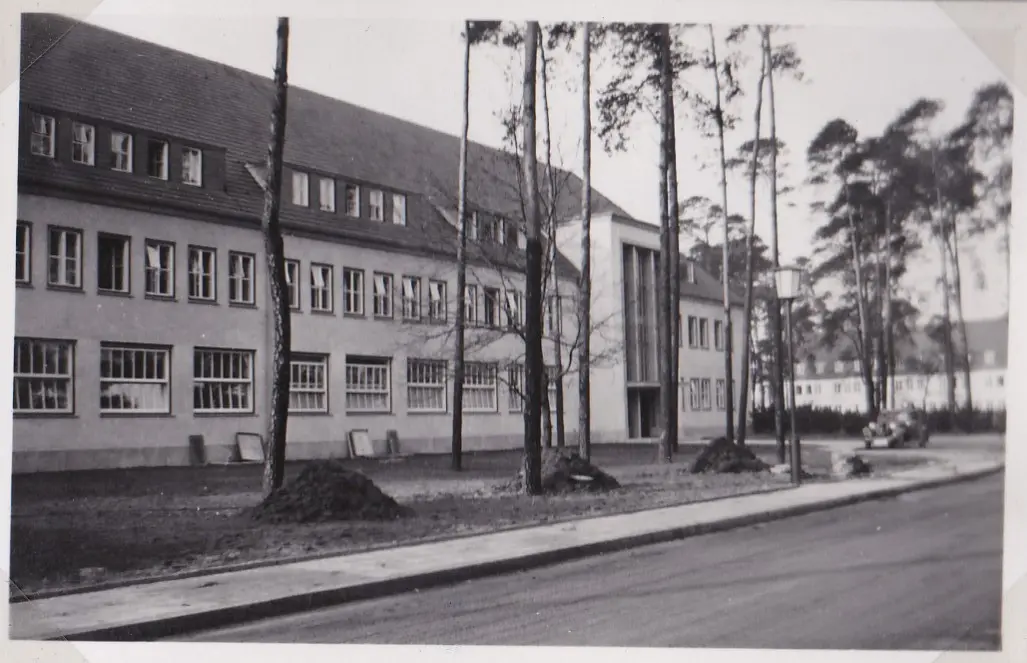
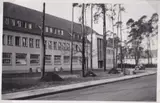
Barracks of the Regiment "General Göring", about 1935
A company building of the barracks in Reinickendorf (today the Julius-Leber-Kaserne), then home of the Regiment "General Göring", about 1935. Photographer unknown.

Synagoge Levetzowstraße ("Sammellager")

Levetzowstraße 7–8, 10555 Berlin-Moabit (corner of Jagowstraße); the synagogue no longer stands, October 1941 – October 1942; again late February – 12 March 1943 ("Fabrikaktion")

The liberal synagogue on Levetzowstraße in Moabit, consecrated in 1914 with room for more than 2,000 worshippers, was one of Berlin's largest synagogues. Its interior was damaged in the November pogrom of 1938, but the building remained standing. In October 1941 officials of the Berlin Gestapo's "Judenreferat" informed the board of the Jewish Community that deportations were about to begin and ordered it to turn the synagogue into a "Sammellager"; according to the local history association Gleis 69, the community leaders received this notice on 1 October 1941, the Day of Atonement (Yom Kippur). The seating was removed from the main hall and straw was spread on the floor as bedding. At first the Gestapo disguised the transports as an apartment-clearing measure and referred to the building as an "emergency shelter" rather than a camp.

From the first "Osttransport" on 18 October 1941 until the 22nd on 26 October 1942, the transports of Berlin Jews to the ghettos in German-occupied eastern Europe – to Litzmannstadt (Łódź), the Baltic region, Minsk and the "Generalgouvernement" – were assembled here. Police brought the victims to the former synagogue, held them for several days and then took them to Bahnhof Grunewald or the Güterbahnhof Moabit. The Jewish Community was forced to provide food, medical care and "Ordner" who supervised the detainees and carried their luggage, while the Gestapo handled registration, the formal stripping of citizenship and property, luggage searches and the confiscation of money and valuables. One survivor's account describes people lying "body to body" in the emptied prayer hall amid indescribable sanitary conditions.

The historians Philipp Dinkelaker and Akim Jah each put the number of people held here before deportation at about 20,000; some memorial texts give a much higher figure of around 37,500. During the "Fabrikaktion" the building served once more as a camp ("Lager II"): according to Jah's reconstruction of the transport lists, about 1,700 people held here were deported to Auschwitz between 2 and 6 March 1943, and after a final transport on 12 March 1943 the camp was closed. The war-damaged synagogue was demolished in 1955–56.

Since 1988 a memorial on the site of the synagogue – a tall steel wall listing the deportation transports from Berlin, a ramp with a freight wagon and figures, and cast-iron reliefs of Berlin's destroyed synagogues – commemorates the deported; a first memorial plaque had been placed there in 1960.

More about this memorial

Sources
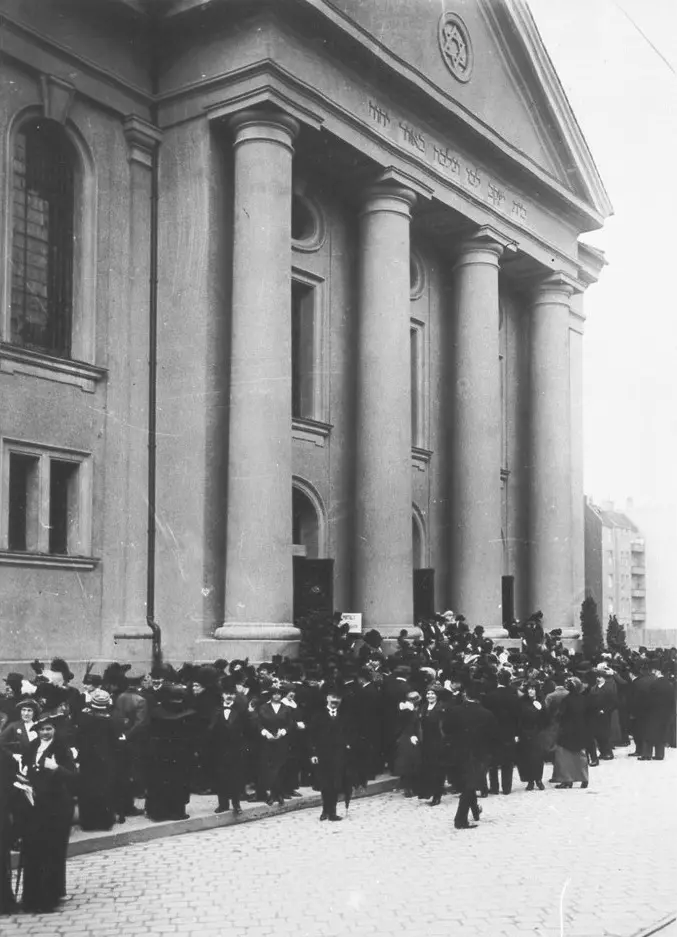
The Levetzowstraße synagogue, about 1914
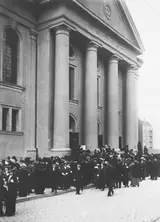
Front view of the Liberal synagogue in Levetzowstraße, Moabit, with a crowd in front of the portico, about 1914, the year it was consecrated. Photographer unknown; source given as Landesarchiv Berlin.

Rosenstraße 2–4 (former Jewish Community administration building)

Rosenstraße 2–4, Berlin-Mitte, near Alexanderplatz (site marked today by the "Block der Frauen" memorial in Rosenstraße), 27 February – mid-March 1943

The Jewish Community had built an administrative centre beside its synagogue at Rosenstraße 2–4 in 1905; in the early 1940s it housed the Community's welfare administration and, as late as December 1942, a "Bereitschaftsheim" and youth hostel. On 27 February 1943 the Gestapo and SS began the "Fabrikaktion", in which between 8,000 and 11,000 Jews were arrested, most of them at their forced-labour workplaces. Those who, under the regime's own rules, were not to be deported at that point – above all Jews living in "Mischehen" with non-Jewish partners and the children of such marriages classified as Jews ("Geltungsjuden") – were separated out and brought to Rosenstraße. The USHMM and a Reichsvereinigung note of 7 March 1943 cited by the historian Wolf Gruner put the number held there at about 2,000; other estimates range from 1,500 to 2,500.

From the evening of 27 February, non-Jewish wives, relatives and friends gathered in front of the building to demand the release of those inside. For about a week they kept returning, even after police dispersed them and despite the risk of being taken into "protective custody" themselves. How many took part is uncertain: the USHMM speaks of up to 200 demonstrators, while the estimates collected by Gruner range from about 150 people on individual days to up to 600 at a time (Nathan Stoltzfus) and several thousand in some later accounts. Releases began on 1 March and continued until 12 March 1943. Twenty-five men were deported from Rosenstraße to Auschwitz with the last "Fabrikaktion" transport on 6 March; unlike the others on that train they were registered there as "Schutzhäftlinge", and they were brought back within a few weeks.

What the protest achieved is disputed. Nathan Stoltzfus argues that the women's public protest forced the regime to give way, with Joseph Goebbels ordering the releases by 6 March. Wolf Gruner concludes from the files that the Gestapo did not intend to deport this group at that time: the detention served to register Jews living in "Mischehen" and to select some of them as replacements for deported employees of Jewish institutions, and about 200 of the detainees were hired by those institutions within days. The USHMM likewise states that the Gestapo never intended to deport these "mixed-marriage" Jews. Gruner stresses that this does not diminish the courage of the people who stood in the street, who could not know the Gestapo's intentions.

Ingeborg Hunzinger's sculpture group "Block der Frauen", unveiled in 1995, and two information columns recalling the events of February–March 1943 stand in Rosenstraße, where an annual commemoration of the "Fabrikaktion" and the protest takes place.

More about this memorial

Sources
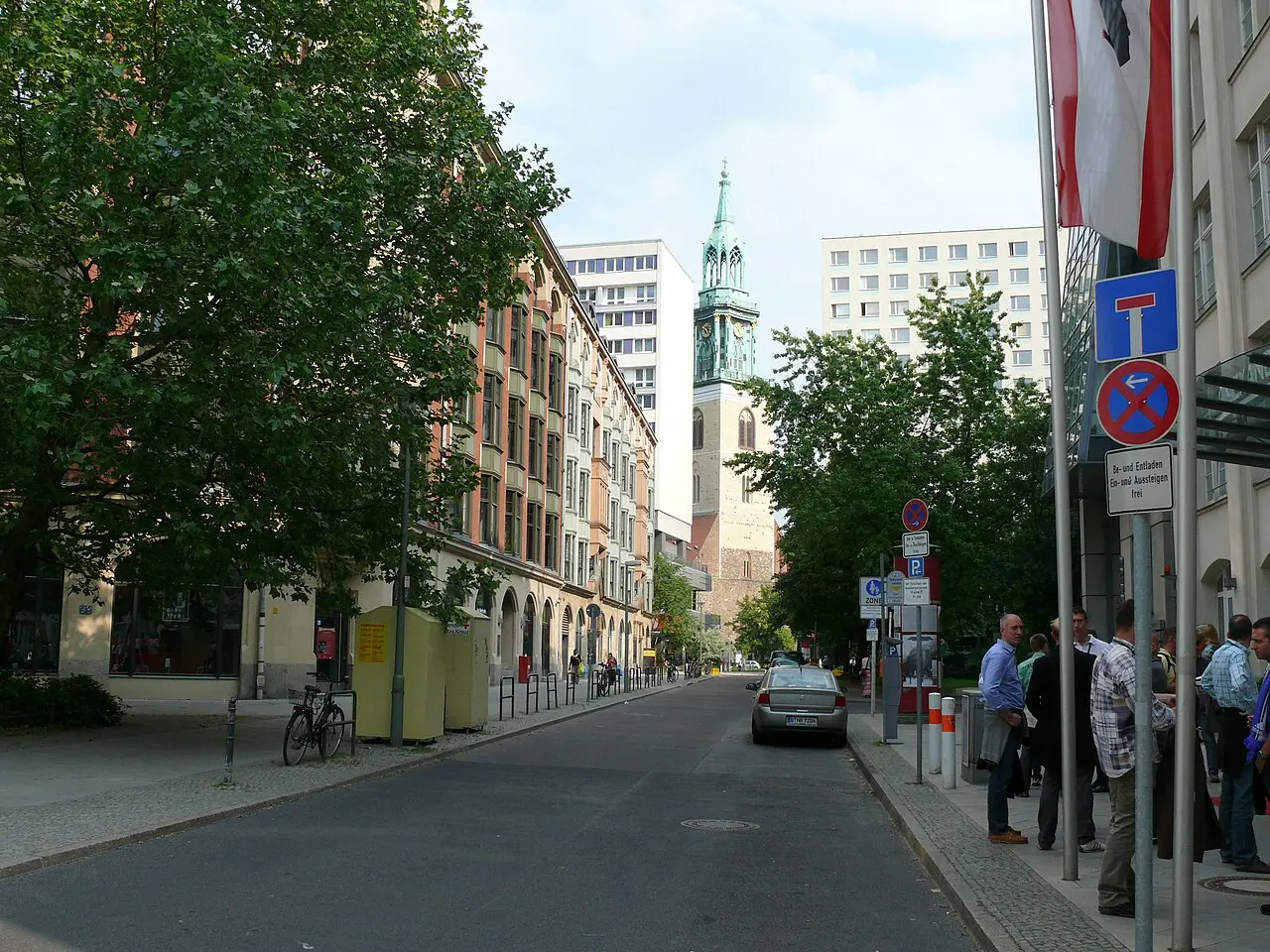
Rosenstraße today
Rosenstraße in Berlin-Mitte looking towards the Marienkirche, May 2011.

Jüdisches Krankenhaus, Schulstraße ("Sammellager")

Jüdisches Krankenhaus Berlin, Heinz-Galinski-Straße 1, Berlin-Gesundbrunnen (Wedding); the camp was in the hospital's former pathology building and gatehouse, given in the sources as Schulstraße 78, March 1944 – April 1945

From mid-1943 the Jewish Hospital in Berlin-Wedding was also the seat of what remained of the "Reichsvereinigung der Juden in Deutschland", run under Gestapo and RSHA control by the physician Walter Lustig. Because the hospital grounds concentrated the remaining Reichsvereinigung departments, quarters for homeless Jews and, from 1944, the Gestapo's last "Sammellager", the complex was referred to as the "Hospital Ghetto".

In early March 1944 the Gestapo moved its "Sammellager" from Große Hamburger Straße into the hospital's former pathology building and gatehouse on Schulstraße, which it fenced with barbed wire. Some of the prisoners and of the Jewish "Ordnungsdienst" were deported beforehand; others were brought along, as were the Gestapo staff under camp leader Walter Dobberke, the Jewish camp administration and the so-called "jüdischer Fahndungsdienst". Until the end of the war this was Berlin's only "Sammellager". According to Akim Jah, more than ten transports each to Auschwitz and Theresienstadt were assembled here, and at least 791 people passed through the camp; the number actually deported from it is given as 246 in Jah's text and as 394 in a Tagesspiegel report. Jah's overview dates the last transport assembled there to 5 January 1945, whereas the Tagesspiegel states that the last transport left Berlin on 27 March 1945.

The camp ended only in the final days of the Battle of Berlin: Jah gives 21 April 1945 as the date of liberation, while the Tagesspiegel reports that the Gestapo officials fled on 22 April and that Soviet troops reached the hospital on 24 April 1945. According to the hospital, between 800 and 1,000 people are said to have been living hidden within its walls at liberation.

A bronze plaque from 1980 at the hospital entrance on Heinz-Galinski-Straße records the institution's history, noting that between 1935 and 1945 it increasingly became a "ghetto" and "Sammellager" for the deportation of Jewish citizens; the Jewish Hospital still operates on the site.

More about this memorial

Sources
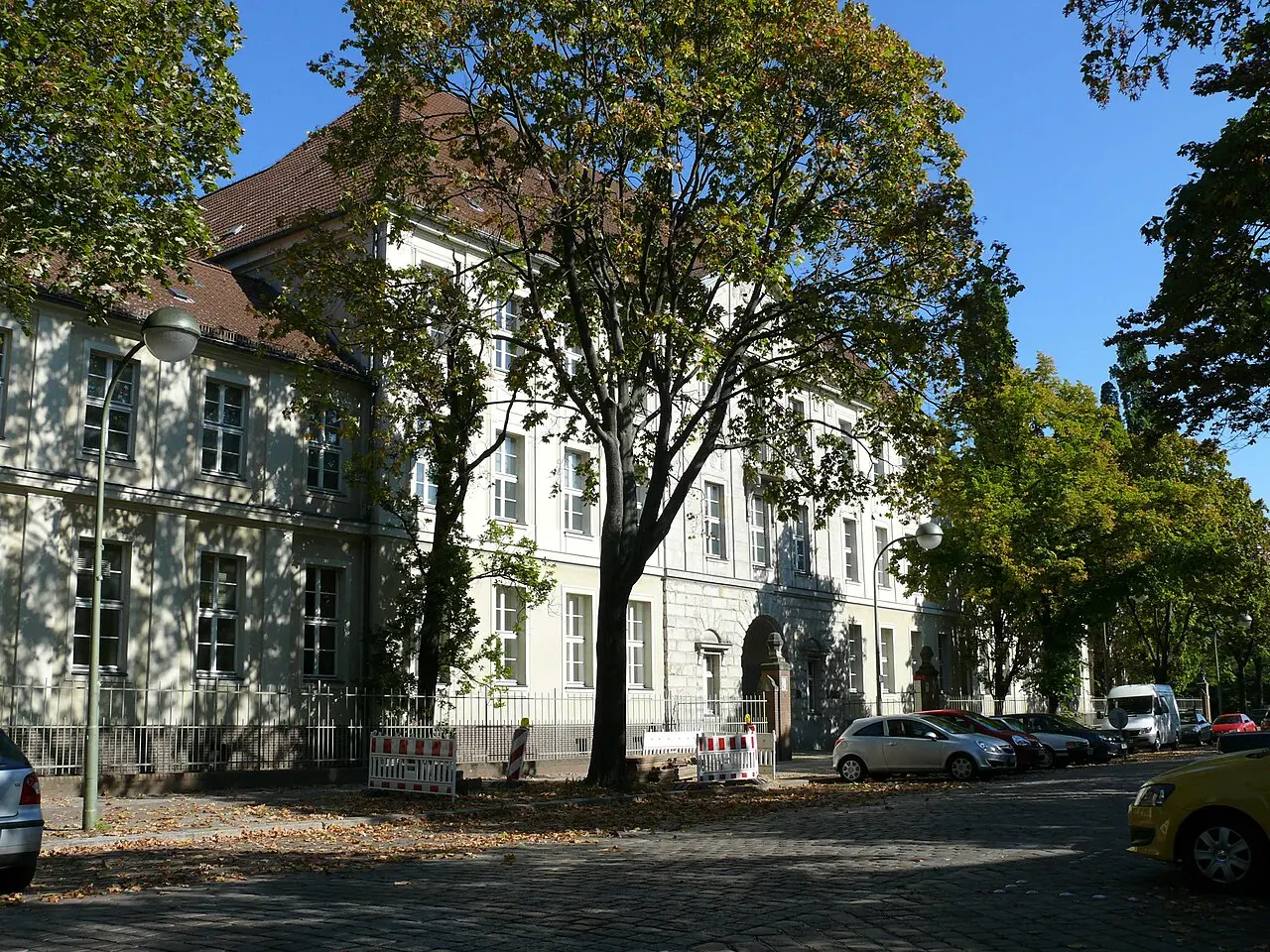
The 1914 hospital buildings, Iranische Straße
The buildings of the Jewish Hospital on Iranische Straße (opened 1914) in October 2011.

Memorials

Where the deportations are remembered in Berlin today.

Block der Frauen (Denkmal Rosenstraße)

Rosenstraße 1–2, 10178 Berlin (Mitte), Unveiled 18 October 1995; commemorates the protest of February–March 1943

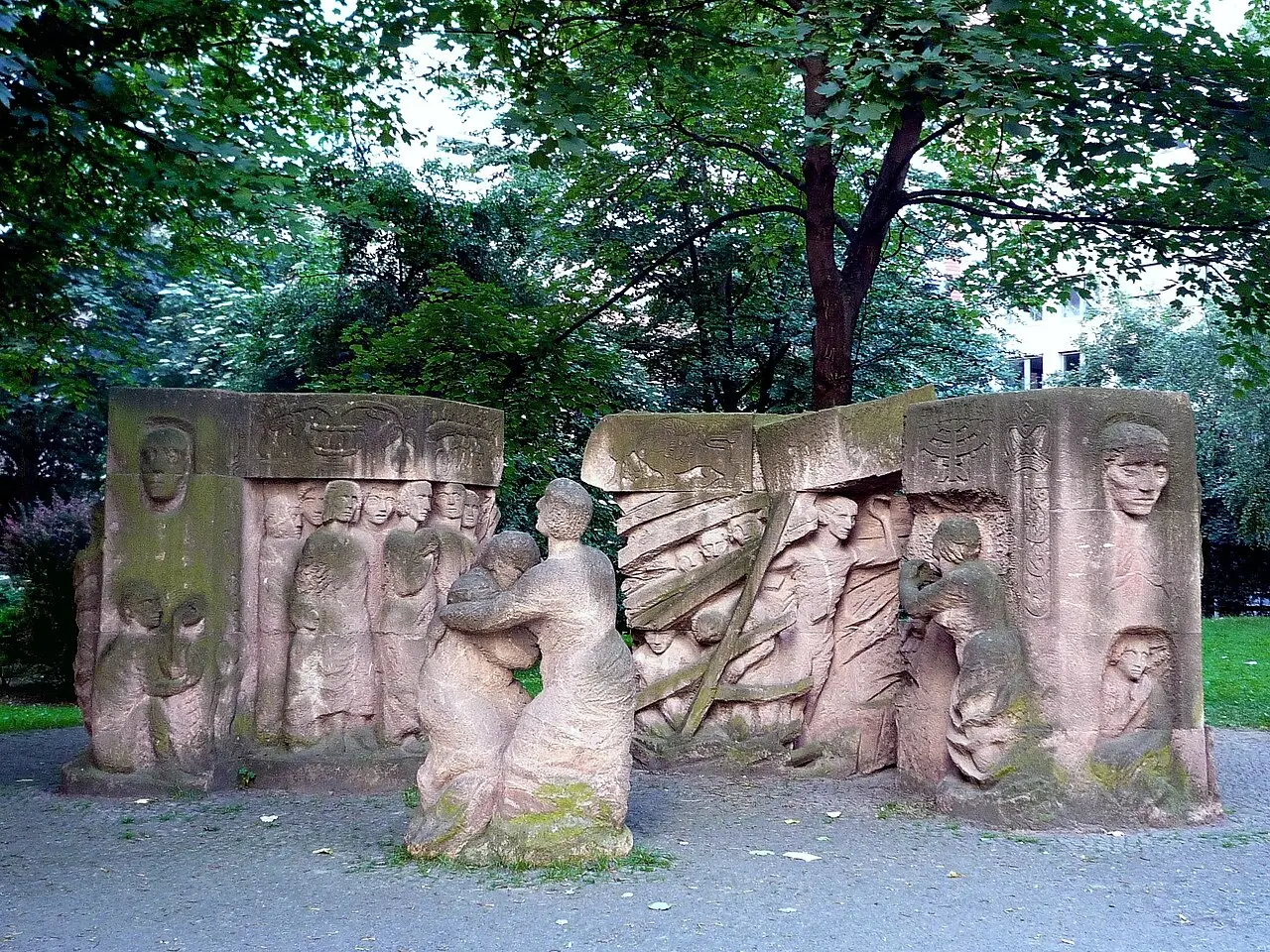
The sculpture group commemorates the protest in Rosenstraße in 1943. On 27 February 1943 the so-called "Fabrikaktion" began, in which the Gestapo and SS arrested the Jews still living in Berlin, many of them at their places of forced labour; the Stiftung Denkmal's memorial portal puts the number arrested at more than 11,000, while Berlin's tourism board gives about 8,000. Between about 1,500 and 2,500 Jewish men, most of them from so-called "mixed marriages", were held in the former welfare office of the Jewish Community at Rosenstraße 2–4. Their non-Jewish wives, relatives and friends gathered in front of the building for days and loudly demanded their release. After about a week the Gestapo began to release several hundred prisoners after examining their cases; they were then obliged to perform forced labour. Most of the Jews arrested in the "Fabrikaktion" did not escape deportation.

The protest remained little known until the late 1980s, when an initiative placed an advertising column with information at the spot where such a column had stood in 1943. In 1995 the Berlin Senate made it possible to install the "Block der Frauen" by the sculptor Ingeborg Hunzinger (1915–2009), who had designed it in the 1980s; it was unveiled on 18 October 1995. Reddish stone blocks arranged in a semicircle carry reliefs and inscriptions: protesting women supporting one another, the arrested men, a man with a broken violin as a symbol of the destruction of Jewish culture, and the release and reunion of families. One inscription reads "Gebt uns unsere Männer wieder" ("Give us back our men"), another speaks of "the power of civil disobedience, the power of love". The ensemble was cleaned and restored in 2022.

The sculpture stands in a small green space on Rosenstraße, near the site of the former Jewish Community building, together with information columns, and is accessible at all times.

More about this memorial

Sources
"Block der Frauen", frontal view
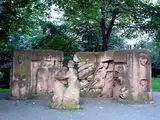
Frontal view of the "Block der Frauen" in the small park on Rosenstraße, Berlin-Mitte, 2010.

Gedenkort Güterbahnhof Moabit

Ellen-Epstein-Straße, 10559 Berlin (Moabit); information stele at Quitzowstraße, Information stele 2007; memorial opened 16 June 2017; light installation 2021

Proposals for a memorial at the deportation tracks of the Moabit freight yard date back to the mid-1990s, and its realisation took more than two decades. In 2006 a round table under the leadership of the Topographie des Terrors foundation was set up, and on 19 January 2007 an information stele designed by Helga Lieser was placed at the former yard entrance on Quitzowstraße. In June 2016 the access road and the remains of the ramp were listed as historic monuments, and on 18 August 2016 a jury awarded first prize in an art competition to the design "Hain" ("Grove") by the Berlin artists' collective raumlabor berlin, funded with 150,000 euros by the Stiftung Deutsche Klassenlotterie Berlin.

The memorial was inaugurated on 16 June 2017. A grove of 20 Scots pines with lime-washed trunks marks the site; the authentic remains include the historic paved path from Quitzowstraße along which deportees were driven, a fragment of track 69 and parts of the ramp. Together with two Corten-steel information panels, the grove commemorates the deportation of more than 32,000 Jews from this yard. Since 5 September 2021 a light installation has made the site visible after dark. In October 2020 the initiative "Ihr letzter Weg" of the association Sie waren Nachbarn published an audio walk with 16 stations tracing the deportation route from the "Sammellager" in the Levetzowstraße synagogue to the freight yard.

The memorial grove on Ellen-Epstein-Straße is freely accessible at all times, with the information stele and paved path at Quitzowstraße and Volkmar Haase's 1987 deportation memorial on the nearby Putlitzbrücke.

More about this memorial

Sources

Mahnmal Gleis 17

Am Bahnhof Grunewald 1, 14193 Berlin, Opened 27 January 1998; commemorates deportations 1941–1945

Deutsche Bahn AG, the successor of the Deutsche Reichsbahn, decided to create a central memorial at Bahnhof Grunewald to the people deported by rail during the Nazi era. In its own words, the deportation of Europe's Jews, Sinti and Roma to the extermination camps would not have been possible without the railway, and the Deutsche Reichsbahn in particular. The memorial was designed by the architects Nicolaus Hirsch, Wolfgang Lorch and Andrea Wandel, who won the competition, and was inaugurated on 27 January 1998 on the former deportation platform, track 17.

The core of the memorial is 186 cast-steel plates set in chronological order into the gravel along both edges of the platform; according to the Stiftung Denkmal's memorial portal, their number stands for the transports that left Berlin. Each plate records the date of a transport, the number of people deported and its destination, beginning with 18 October 1941; Deutsche Bahn dates the last transport, to Theresienstadt, to 27 March 1945. The vegetation that had grown over the track in the decades since was deliberately left between the rails, as a sign that no train will ever leave from this track again.

The memorial is open to the public at all times and is reached via the S-Bahn station Grunewald; Karol Broniatowski's 1991 memorial wall stands near the station entrance.

More about this memorial

Sources
Gleis 17: the memorial platform
Overview of the Gleis 17 memorial at Bahnhof Grunewald: the former deportation track between platform edges covered with 186 cast-steel plates, opened by Deutsche Bahn on 27 January 1998. Photographed in April 2009.

Gedenkort Große Hamburger Straße (Alter Jüdischer Friedhof, Altenheim, Lammert-Figurengruppe)

Große Hamburger Straße 26, Berlin-Mitte, Cemetery 1672–1827 (destroyed 1943); "Sammellager" in the old-age home 1942–1943/44; sculpture group since 1985

Große Hamburger Straße holds Berlin's oldest Jewish cemetery, opened in 1672 and closed in 1827; probably more than 10,000 Berlin Jews were buried there, among them the philosopher Moses Mendelssohn (1729–1786). In front of the cemetery stood the Jewish Community's old-age home. The Gestapo turned the home into a "Sammellager" for deportations; sources date this differently, to 1941 (Gedenktafeln in Berlin), 1942 (the memorial inscription) or 23 May 1942 (Bundeszentrale für politische Bildung), while the historian Akim Jah dates its conversion to early June 1942. The "Sammellager" was later moved to the Jewish Hospital in Wedding: at the end of 1943 according to the Bundeszentrale, in early March 1944 according to Jah's reconstruction from the transport records. In 1943 the cemetery was destroyed: a trench was dug across it and gravestones were smashed. In the last days of the war 2,427 people killed in the fighting were buried in mass graves on the site; the old-age home was destroyed by bombing in early 1945.

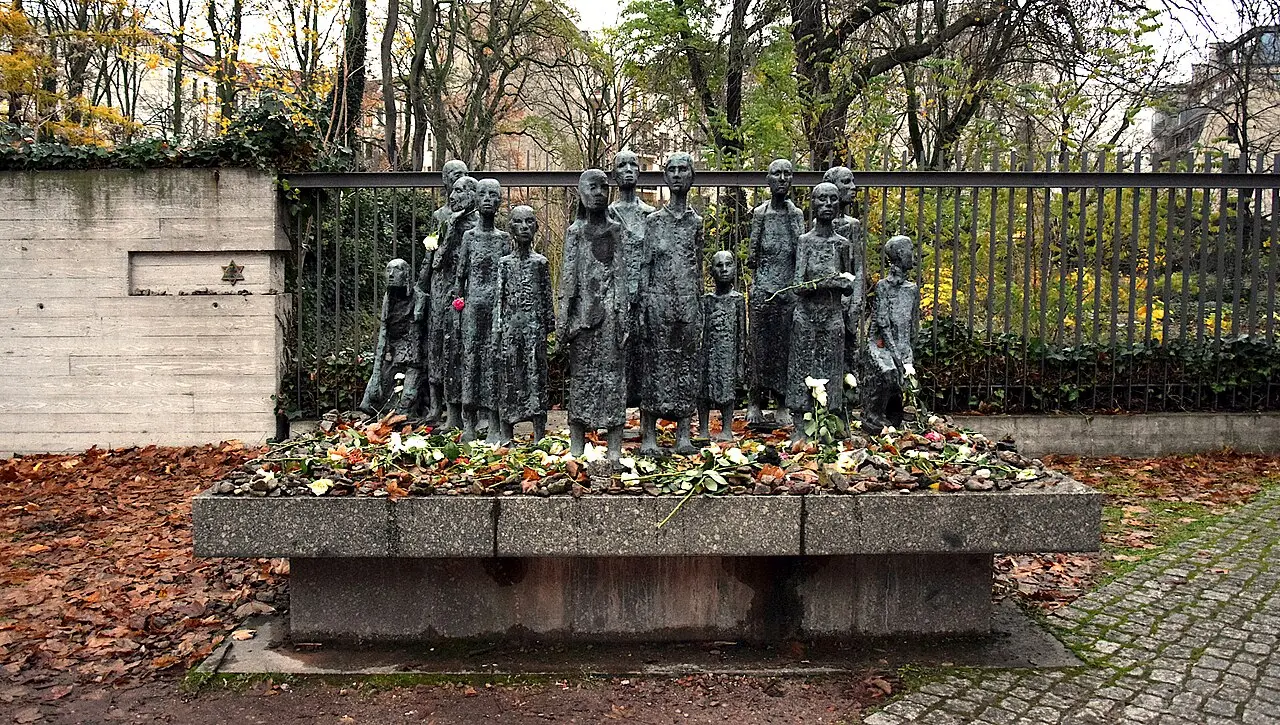
Since 1985 a bronze group of figures by the sculptor Will Lammert has stood here in memory of the deported and murdered Berlin Jews, the old-age home and the destroyed cemetery. Lammert, who died in 1957 leaving the work unfinished, had originally conceived the figures for Ravensbrück; in the mid-1980s thirteen of them were cast and arranged as a wedge-shaped group. Nearby, a memorial plaque recalls that the Gestapo turned the home into a "Sammellager" and speaks of 55,000 Berlin Jews, "from infants to the elderly", deported to Auschwitz and Theresienstadt and murdered. The history of this marker is given differently: a first memorial stone was unveiled on 9 November 1959 according to Gedenktafeln in Berlin, while a contemporary ADN-Zentralbild photograph in the Bundesarchiv dates the unveiling of a memorial stone on the site to 9 November 1960, and the Bundeszentrale für politische Bildung dates a memorial stone set up by the East Berlin municipal government to 1987. During a redesign in 2007/08 the foundations of the old-age home were marked with bands of red brick.

The bronze figure group, the memorial plaque and the marked foundations of the old-age home can be seen at the old cemetery on Große Hamburger Straße; the preserved building of the Jewish boys' school next door still bears its inscription "Knabenschule der Jüdischen Gemeinde".

More about this memorial

Sources
Will Lammert's figure group, Große Hamburger Straße
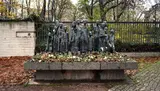
The bronze figure group "Jüdische Opfer des Faschismus" by Will Lammert at Große Hamburger Straße 26, with stones and flowers left by visitors, November 2023.

Mahnmal Levetzowstraße

Levetzowstraße 7–8, 10555 Berlin (Moabit), Memorial inaugurated 14 November 1988; restored and reopened 2019

The memorial stands on the site of the Liberal synagogue in Levetzowstraße, inaugurated in 1914 with room for more than 2,000 worshippers. Its interior was partly destroyed in the November pogrom of 1938, but the building survived. From autumn 1941 the Gestapo forced the Jewish Community to run a "Sammellager" in the synagogue: families were usually taken from their homes in the middle of the night and held here for several days before deportation, and on the way to the stations they were beaten. Until spring 1942 the transports left from Bahnhof Grunewald, afterwards from the Moabit freight yard and the Anhalter Bahnhof. The synagogue was hit by bombs in 1944 and its remains were demolished in the mid-1950s.

The memorial was created on the initiative of the Berlin Senate by the architects Jürgen Wenzel and Theseus Bappert with the sculptor Peter Herbrich and inaugurated on 14 November 1988. It consists of a stylised deportation ramp with a freight wagon, marble figures of bound people on the ramp and inside the wagon, and a tall iron wall listing the date, number of people and destination of 63 deportation transports from Berlin. Plaques set into the ground show reliefs of Berlin synagogues with their addresses, seating capacity, year of construction and date of damage or destruction. After years of deterioration and alterations, the memorial was restored and reopened on 11 November 2019, including the replanting of the hornbeams that symbolise the former synagogue.

The memorial is freely accessible at all times beside a playground on Levetzowstraße, and commemorations are held here each year on 9 November.

More about this memorial

Sources

Picture credits

  1. Albert Einstein at a charity concert in the Neue Synagoge, 1930. Unknown photographer, 1930, public domain (via Wikimedia Commons). Source

  2. Market stall in Grenadierstraße, 1933. Bundesarchiv, Bild 183-1987-0413-505 / P. Buch / CC BY-SA 3.0 DE. Source, licence

  3. Perpetrator photograph: Boycott of Jewish shops, 1 April 1933. Bundesarchiv, Bild 102-14468 / Georg Pahl / CC BY-SA 3.0 DE. Source, licence

  4. Kulturbund orchestra rehearsing "Judas Maccabaeus", 1934. Unknown photographer, 1934; family album of Dr. Werner Liebenthal; public domain (via Wikimedia Commons). Source

  5. Synagogue in Fasanenstraße, before 1938. Waldemar Titzenthaler, public domain (via Wikimedia Commons). Source

  6. Perpetrator photograph: Woman wearing the yellow star, Berlin, September 1941. Bundesarchiv, Bild 183-B04489 / CC BY-SA 3.0 DE. Source, licence

  7. Anhalter Bahnhof platforms, 1942. Landesarchiv Baden-Württemberg, Staatsarchiv Freiburg W 134 Nr. 003395ra / Fotograf: Willy Pragher / CC BY 4.0. Source, licence

  8. Gleis 17: the preserved track in winter. Photo: Michael F. H. Barth / Wikimedia Commons / CC BY-SA 4.0. Source, licence

  9. Track 69 and ramp, Gedenkort Güterbahnhof Moabit. Photo: Detlef Bihn / Wikimedia Commons / CC BY-SA 4.0. Source, licence

  10. The "Clou" concert hall, 1911. Postcard, Kunstverlag Paul Kaufmann, 1911, public domain (via zeno.org / Wikimedia Commons). Source

  11. Haus der Statistik, on the former Gerlachstraße. Photo: Gunnar Klack / Wikimedia Commons / CC BY-SA 4.0. Source, licence

  12. Barracks of the Regiment "General Göring", about 1935. Family collection of Michael Klemp, via Wikimedia Commons, CC BY-SA 4.0. Source, licence

  13. The Levetzowstraße synagogue, about 1914. Landesarchiv Berlin (photographer unknown), via Wikimedia Commons, public domain. Source

  14. Rosenstraße today. Photo: Fridolin freudenfett (Wikimedia user) / Wikimedia Commons / CC BY-SA 4.0. Source, licence

  15. The 1914 hospital buildings, Iranische Straße. Photo: Peter Kuley (Fridolin freudenfett) / Wikimedia Commons / CC BY-SA 3.0. Source, licence

  16. "Block der Frauen", frontal view. Photo: Manfred Brückels / Wikimedia Commons / CC BY-SA 3.0. Source, licence

  17. Gleis 17: the memorial platform. Photo: Andreas Praefcke / Wikimedia Commons / CC BY 3.0. Source, licence

  18. Will Lammert's figure group, Große Hamburger Straße. Singlespeedfahrer (Wikimedia user) / Wikimedia Commons (CC0). Source, licence

All credits