The Gestapo’s lists give each person’s age, occupation, place of birth and last address. Counted together, they show who was taken: the old and the very young, more women than men, people stripped of their work, people born across Central Europe who had made Berlin their home. Very few came back. The figures come from the 47,790 entries read so far on 182 transport lists and grow as the reading continues. They are the perpetrators’ records, and say nothing of who these people were to the people who loved them.
Their ages
54 was the median age: half were older
12,370 were 65 or older
3,223 were children of 15 or younger
The regime sent most of the old to Theresienstadt, which it presented as a “ghetto for the elderly”: the median age there was 69. Those sent east, to Riga, Auschwitz and other killing sites, were younger, with a median age of 48, and included almost all the children.
Theresienstadt The east
Age on the day of departure, from the date of birth on the list; known for 44,733 of 47,790 people.
The figures as a table
Age
Theresienstadt
The east
All
0–9
199
1,645
1,844
10–19
284
2,567
2,851
20–29
234
2,493
2,727
30–39
374
3,733
4,107
40–49
921
5,906
6,827
50–59
1,494
7,433
8,927
60–69
3,914
6,114
10,028
70–79
5,176
764
5,940
80–89
1,390
30
1,420
90–99
45
16
61
100 and older
0
1
1
Their work
65% are listed “ohne Beruf”, without occupation
4,875 as workers, nearly all of them forced labourers
By the time of the deportations, Jews had been driven out of almost every profession, business and office. The lists record what the regime had left them: no occupation, or forced labour in Berlin’s factories. The trades and professions the lists still name, merchants, dressmakers, clerks, nurses, teachers, are what remained of working lives that had once been far more varied.
No occupation20,757
Workers, mostly forced labour4,875
Crafts and trades1,276
Trade and commerce1,240
Office and clerical752
Children, pupils and apprentices692
Household and domestic work417
Professions, teaching and the arts316
Medicine, nursing and care251
Retired26
Other or not legible1,227
Arbeiterin worker (woman)2,280
Arbeiter worker2,087
Kaufmann merchant771
Kind child561
Arbeiter(in) worker299
Schneiderin dressmaker251
Näherin seamstress204
Verkäuferin saleswoman169
Hausangestellte domestic servant143
Angestellte(r) employee136
Schneider tailor129
Stenotypistin shorthand typist120
Haushalt household113
Kontoristin office clerk99
Buchhalter bookkeeper98
Putzmacherin milliner68
Schlosser fitter, locksmith65
Schüler pupil64
Köchin cook48
Buchhalterin bookkeeper (woman)45
Occupation recorded for 31,829 of 47,790 people; many lists have no column for it. “As written” leaves out “ohne Beruf” (20,757).
Where they were born
31% were born in Berlin
2,159 birthplaces, from Alsace to Ukraine
Most were not born in Berlin. Many came from the former Prussian provinces of Posen, West Prussia and Silesia, which became Polish after 1918, and from Breslau, Königsberg and Vienna. Others came from across Germany and Eastern Europe. When the Gestapo listed them, 43,544 lived in Berlin. 877 lived elsewhere and were deported through Berlin: from Leipzig, Magdeburg, Köln, Tilsit, and from training farms and labour camps.
Berlin12,146
Breslau Wrocław801
Posen Poznań781
Hamburg314
Königsberg Kaliningrad276
Stettin Szczecin256
Wien Vienna248
Leipzig215
Bromberg Bydgoszcz196
Frankfurt Frankfurt am Main186
Beuthen Bytom177
Danzig Gdańsk174
Gnesen Gniezno171
Rogasen Rogoźno169
Magdeburg160
Hohensalza Inowrocław160
Krojanke Krajenka152
Gleiwitz Gliwice148
Warschau Warsaw144
Thorn Toruń134
Ostrowo Ostrów Wielkopolski121
Zempelburg Sępólno Krajeńskie121
Kattowitz Katowice119
Köln117
Schrimm Śrem116
Places as the lists name them, with today’s names. No borders are drawn: they changed more than once in these lifetimes. 32,363 of the 39,332 birthplaces on the lists are placed so far; names shared by several towns (there are many a Neustadt) wait to be settled. 279 people born beyond the map, in Odessa, London, New York, Riga, Paris, Moskau and elsewhere, are counted in the chart.
Where they lived in Berlin
44% lived in Charlottenburg, Wilmersdorf or Schöneberg
6,684 in Mitte, the old centre around the Scheunenviertel
The deportations reached every district of the city. Most people lived in the old centre, Mitte, and in the western districts of Charlottenburg, Wilmersdorf and Schöneberg, where many had settled since the turn of the century. By the time of the deportations many no longer lived in homes of their own: the regime had forced them into “Jewish houses” and shared rooms. The address on the list is often that last, forced one.
Mitte6,684
Charlottenburg5,068
Wilmersdorf5,024
Schöneberg4,534
Prenzlauer Berg3,929
Tiergarten2,773
Kreuzberg1,260
Friedrichshain1,230
Wedding706
Spandau290
Weißensee285
Tempelhof267
Steglitz242
Neukölln209
Pankow167
Lichtenberg124
Zehlendorf71
Köpenick38
Reinickendorf29
Treptow24
Last addresses on the lists, placed street by street (32,954 of 43,544 Berlin addresses so far), in the districts of 1920–45 as rebuilt from today’s localities, so boundaries are approximate. One circle per street, never per house; the street map shows the inner city, and 1,262 people from streets further out are on the district map. 2,070 addresses were not homes but the assembly camps and the Jewish Hospital where people were held before deportation, and are left out. Streets: OpenStreetMap.
Women and men
63% were women
7,220 women over 65, against 3,570 men
Far more women than men were deported. Before the war, younger men were more often able to emigrate, sometimes ahead of their families, and older women, many of them widows, stayed behind. On the lists, married women outnumber married men more than two to one. Among the very old, women outnumber men two to one.
Women Men
194167%33%950
194267%33%21,097
194359%41%17,455
194459%41%1,329
194552%48%116
Married9,7443,926
Single8,0085,463
Widowed697
Divorced239
Women and men are told apart by the forced names “Sara” and “Israel” the lists add, known for 40,947 of 47,790 people. Marital status appears only on some lists.
Who survived
2,010 survived, of 39,743 people on transports whose survivors are counted
1 in 20 came back
Of those sent east, to Riga, Auschwitz and Kowno (Kaunas), almost no one survived: 1.2%. Of those sent to Theresienstadt, 12% lived to see liberation, most of them on the last transports of 1944 and 1945, when the war was ending. Many deported to Theresienstadt were sent on from there to Auschwitz and Treblinka and murdered.
5.1% survived · All transports
12% survived · To Theresienstadt
1.2% survived · To the east
19417,296 deportedtoo few transports counted (1 of 7)–
194223,750 deported3.0%
194318,687 deported3.7%
19441,413 deported48%
1945144 deported57%
Auschwitz 241 of 18,2961.3%
Theresienstadt 1,696 of 13,80612%
Riga 58 of 4,8021.2%
Litzmannstadt 4,207 deportednot known–
Minsk 1,030 deportednot known–
Kowno 0 of 1,006none
Piaski 0 of 973none
Raasiku bei Reval 809 deportednot known–
Sobibor 746 deportednot known–
Warschau 1 of 6430.2%
Sachsenhausen 10 of 1895.3%
Maly Trostenez, near Minsk 202 deportednot known–
Ravensbrück 4 of 2814%
Survivors per transport as the transport records count them (the Bundesarchiv’s Memorial Book chronology, statistik-des-holocaust.de, the Terezín Initiative Institute), known for 171 of 186 transports; not yet person by person. Where too few are counted, the chart says so rather than show none.
How this memorial is made
Using modern AI for historical detective work
The regime’s bureaucracy recorded every transport. The Gestapo typed a list of the people on it and sent it to the finance authorities, who seized what they left behind. The lists survive in a number of archives, many as faint carbon copies that ordinary text recognition cannot read. We use AI to read them, and we built the checks so that no machine has the last word.
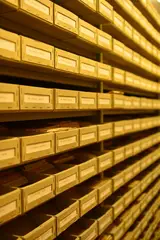
The Central Name Index of the Arolsen Archives in Bad Arolsen. The Gestapo’s Berlin lists are kept in the same archive.
1
Collect the files
We acquired every document from the Gestapo’s Berlin deportation files: 5,930 images of 2,965 documents in 99 files. Besides the lists, the files hold the Gestapo’s letters to the finance authorities and lists of the property they seized.
2
Match two copies of every page
The same lists also survive on a microfilm made decades ago. Image recognition matched 2,183 of its 2,185 pages to their originals. Along the way it found 17 list pages the microfilm had missed, and a page that an online copy had filed under the wrong transport.
Microfilm copy
Original
3
Read the original
A vision model reads each page from the original, row by row, and writes down only what it can see: name, given names, date and place of birth, address. A letter it cannot be sure of stays a question mark.
No.NameGiven names ?BornPlace
4
Read it again, independently
A second reading comes from the other copy, made without seeing the first. Text recognition on the original adds a third, mechanical check.
Both readings the same: the name can be shown
They differ: a person decides from the original
Unreadable in both: it stays hidden
5
Check every row
Each row is checked against the list’s own running numbers and the ages it gives, and against the personal files the finance authorities kept on the people they robbed: 40,674 of them are online at the Brandenburg state archive.
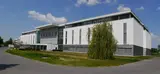
The Brandenburg State Archive in Potsdam-Golm, which holds the personal files.
The running number follows the one before
The age fits the birth date on the day of departure
A personal file has the same name and birth date
6
A person decides
A name appears only when two readings agree. Where they disagree, a person looks at the original and decides, and the decision is recorded with its source.
The list of 13 January 1942, read twice
201entries where both readings agree exactly
254where they differ, each checked by a person
1,024entries on the list, not counting 13 struck from it
So far 2,196 of 2,190 list pages have been read from the originals, completing the lists of 179 of 179 transports.
What the AI does not do
It does not guess a letter, fill a gap, or write a biography, and it never decides on its own what is shown. The names the regime forced on Jewish people, “Sara” and “Israel”, are recorded where the lists show them and never displayed.
For archives and researchers
Matching copies page by page, reading every page twice, and checking each name against other records works for any typed list. We would be glad to share how we did it: write to info@berlindeportations.com.
For the families of the people deported, many of whom are still searching for a name, a date, or a last address. If you are one of them, write to us.
For the survivors and their descendants, who carry what no list records.
For Berliners, who live on the streets these people were taken from.
And for those who come after us. The deportations were not hidden. In the middle of the city, the Gestapo organised them, police officers guarded the trains, the Reichsbahn ran them, and the finance authorities seized and sold what people left behind. Knowing how it was done is how we learn from it.
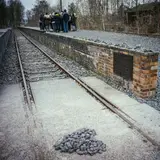
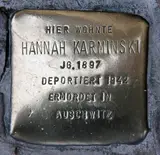
The Gleis 17 memorial at Bahnhof Grunewald. Visitors have laid stones on the preserved track and along the old brick platform wall. Inset: Stolperstein "Hier wohnte Hannah Karminski, Jg. 1897, deportiert 1942, ermordet in Auschwitz" at Oranienburger Straße 22, Berlin-Mitte (photographed 2015).
Picture credits
13 pictures: authors, sources, and licences
Gleis 17: the preserved track in winter. Photo: Michael F. H. Barth / Wikimedia Commons / CC BY-SA 4.0. Source, licence
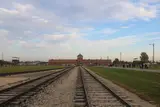
Gatehouse and tracks of Auschwitz II-Birkenau (2019). Ingo Mehling / Wikimedia Commons, CC BY-SA 4.0. Source, licence
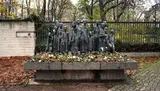
Will Lammert's figure group, Große Hamburger Straße. Singlespeedfahrer (Wikimedia user) / Wikimedia Commons (CC0). Source, licence
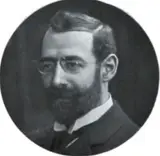
Leo Baeck, portrait published in "Ost und West" (1912). Ost und West, 1912 (via HathiTrust / Wikimedia Commons); photographer unknown. Source
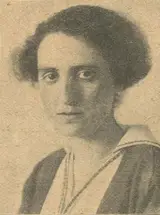
Dr. Cora Berliner, Berliner Illustrirte Zeitung, January 1920. Photo: A. Matzdorff, Berliner Illustrirte Zeitung 1920 (digitised by Zentral- und Landesbibliothek Berlin). Source, licence
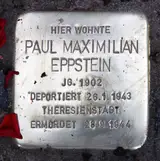
Stolperstein for Paul Maximilian Eppstein, Ludwigkirchstraße 10a, Berlin-Wilmersdorf. Photo: OTFW, Berlin / Wikimedia Commons, CC BY-SA 3.0. Source, licence
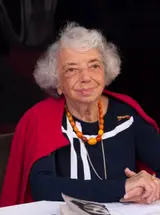
Margot Friedländer at a reading, 2012. Photo: Scott-Hendryk Dillan / Wikimedia Commons, CC BY-SA 3.0. Source, licence
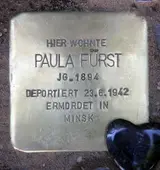
Stolperstein for Paula Fürst, Kaiserdamm 101, Berlin-Charlottenburg. Photo: OTFW, Berlin / Wikimedia Commons, CC BY-SA 3.0. Source, licence
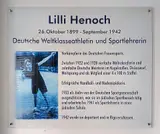
Memorial plaque for Lilli Henoch, Fritz-Lesch-Straße 32, Berlin-Alt-Hohenschönhausen. Photo: OTFW, Berlin / Wikimedia Commons, CC BY-SA 3.0. Source, licence
Rows of card boxes on shelves in the Central Name Index of the Arolsen Archives. Photo: ITS Arolsen, Andreas Greiner-Napp / Wikimedia Commons / CC BY-SA 3.0 DE. Source, licence
The building of the Brandenburg State Archive in Potsdam-Golm, with the word ARCHIV on its facade. Photo: Andreas Lippold / Wikimedia Commons / CC BY-SA 4.0. Source, licence
The Gleis 17 memorial at Bahnhof Grunewald: stones laid on the preserved track and along the platform wall, with visitors on the platform. Photo: Berlin Experiences. Source
Stolperstein for Hannah Karminski, Oranienburger Straße 22, Berlin-Mitte. Photo: OTFW, Berlin / Wikimedia Commons, CC BY-SA 3.0. Source, licence