Izbica (Distrikt Lublin)
Ghetto, transit camp, 1942–1943. Today Izbica, Poland.
Before the war Izbica, in the Lublin region, was an almost entirely Jewish town: in 1921 Jews made up 93 percent of its 3,085 inhabitants, and by 1939 the population exceeded 5,000.
From March 1942 the German authorities used Izbica as a transit ghetto in the "Aktion Reinhardt". Between March and June 1942 transports arrived from Theresienstadt, from German cities including Koblenz, Nuremberg, Breslau, Düsseldorf, Stuttgart and Frankfurt am Main, and from Vienna and Slovakia – according to the Bildungswerk Stanisław Hantz, far more than 16,000 people. The deportees lived in primitive, dirty and vermin-infested houses until they were sent on to the killing centres at Belzec (operating from March 1942) and Sobibor (from May 1942). The first deportation, on 24 March 1942, took about 2,200 Polish Jews to Belzec.
Major deportations followed in October and early November 1942; in early November 1942 more than 1,000 people were shot at the Jewish cemetery and buried in mass graves. The last Jews were taken to Sobibor in April 1943. More than 26,000 Polish and foreign Jews passed through Izbica, and more than 3,000 died in the town itself; only 14 of its pre-war Jewish inhabitants survived.
From Berlin
No transport from Berlin directly to Izbica is recorded in the sources consulted: the list of Berlin deportation trains on statistik-des-holocaust.de contains none, and the Bildungswerk Stanisław Hantz's list of transports to Izbica includes none from Berlin. The Berlin deportations into the Lublin District in spring 1942 went to Piaski (28 March 1942); by the end of that month about 4,000 Reich and Protectorate Jews had reached Izbica (two transports from Theresienstadt and one each from Aachen/Koblenz and Nuremberg) and 2,000 had reached Piaski, among them the Berlin transport. Izbica is significant in this context as the transit ghetto through which Jews from other German cities, Austria and the Protectorate were sent to Belzec and Sobibor.
No transport went directly from Berlin to this place.
The memorial today
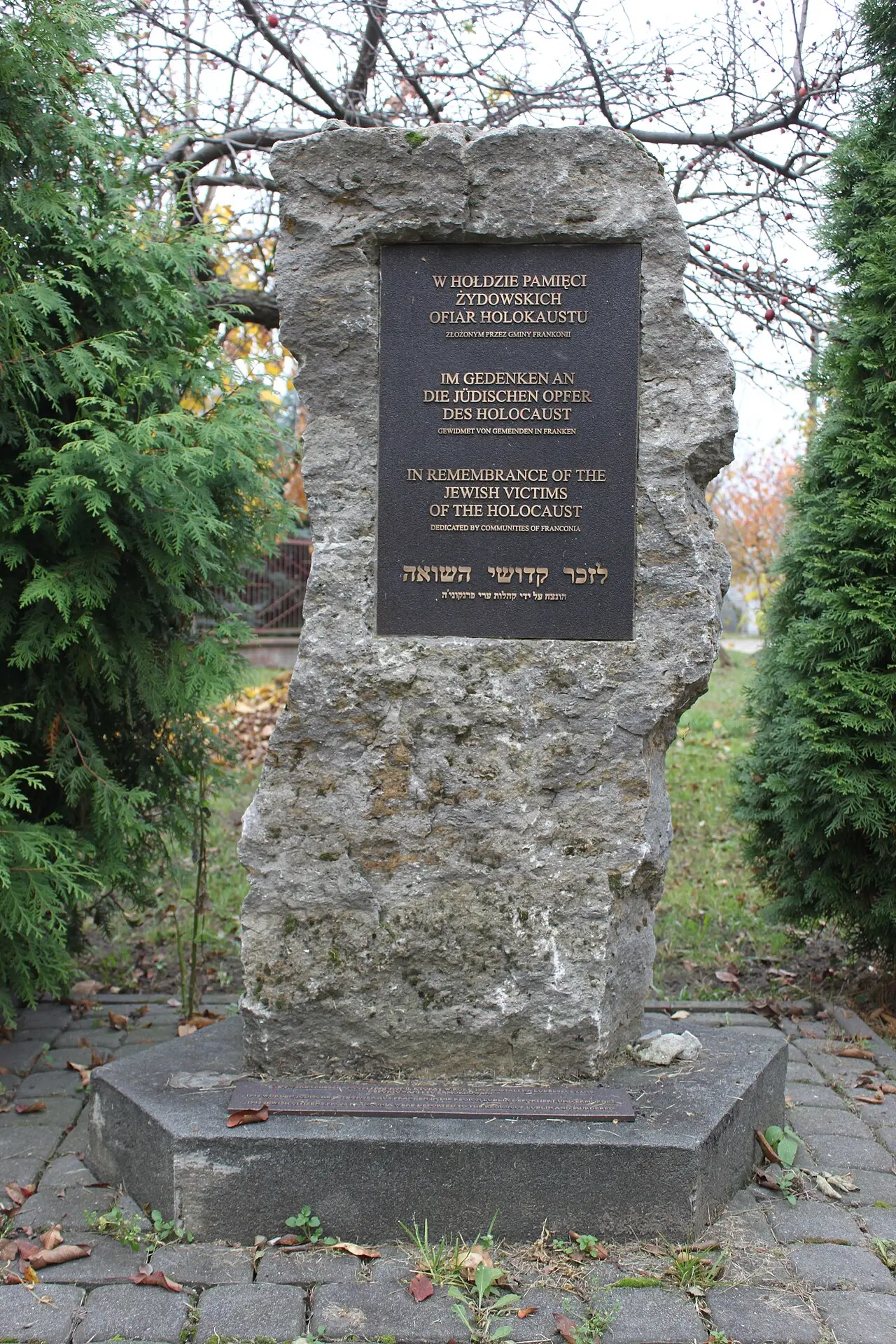
Since 15 October 2019 a place of remembrance at the Maria Konopnicka school complex in Izbica, created with the Bildungswerk Stanisław Hantz, collects traces of the deportees. Information plaques installed in 2005 at the mass graves in the Jewish cemetery were destroyed in 2009.
Sources
- Jewish Historical Institute (ŻIH): You can't run away from Izbica. Jan Karski's story Pre-war population (93% of 3,085 in 1921; over 5,000 in 1939); transit point for Jews from Poland, Czechoslovakia and Western Europe; Belzec from March and Sobibor from May 1942; over 26,000 passed through; 14 pre-war inhabitants survived
- Bildungswerk Stanisław Hantz: Das Transitghetto Izbica Far more than 16,000 deported to Izbica March–June 1942; 24 March 1942 c. 2,200 to Belzec; more than 1,000 shot at the cemetery in November 1942; over 26,000 passed through, over 3,000 died in the town; liquidation April 1943
- Bildungswerk Stanisław Hantz: Deportationen von und nach Izbica List of transports to and from Izbica (origins incl. Theresienstadt, Koblenz, Nuremberg, Vienna, Breslau, Düsseldorf, Stuttgart, Frankfurt, Slovakia); no Berlin transport listed
- Bildungswerk Stanisław Hantz: Der jüdische Friedhof in Izbica Shootings and mass graves in early November 1942; plaques installed by 2005, destroyed spring 2009
- Bildungswerk Stanisław Hantz: Izbica – Ort der Erinnerung Place of remembrance at the Maria Konopnicka school inaugurated 15 October 2019
- USHMM Holocaust Encyclopedia: Belzec German, Austrian and Czech Jews held in the transit ghettos of Izbica and Piaski deported to Belzec
- Statistik des Holocaust: Berlin transport list No Berlin transport to Izbica listed
- Statistik des Holocaust: XI. Transport By end of March 1942 c. 4,000 to Izbica (Theresienstadt x2, Aachen/Koblenz, Nuremberg) and 2,000 to Piaski (Mainz/Darmstadt, Berlin)
- OpenStreetMap: Izbica, gmina Izbica, powiat krasnostawski (relation 6868767) coordinates (town centroid; the whole town served as the transit ghetto)