Lublin
Ghetto, 1941–1942. Today Lublin, Poland.
Lublin, in eastern Poland, was the capital of the Lublin District of the German-occupied "Generalgouvernement". On the eve of the war about 40,000 Jews lived in the city, roughly 35 percent of its population. In the early months of the occupation the German authorities pursued a plan for a Jewish "reservation" in the Lublin area; by February 1940, 6,300 Jews had been brought to Lublin under it before the scheme was dropped in April 1940.
Lublin was the headquarters of SS and Police Leader Odilo Globocnik, whom Himmler put in charge of "Aktion Reinhardt", the murder of the Jews of the "Generalgouvernement" in the killing centres of Bełżec, Sobibor and Treblinka. Globocnik's staff in Lublin planned the deportations, built the camps and coordinated the timing of transports; the clothing and belongings of the victims were stored at a camp on Lublin's "old airport".
The Lublin ghetto was formally established at the end of March 1941, after about 10,000 Jews had been expelled from the city. On 17 March 1942 the first transports from the ghetto went to Bełżec, the start of the mass murder there. Within about a month some 30,000 people were deported to Bełżec or killed in nearby forests. About 4,000 remaining Jews were moved to a "small ghetto" in the suburb of Majdan Tatarski; in the autumn of 1942 almost all of them were deported to Majdanek and murdered. The last Jews held in workshops in the Lublin fortress were killed in July 1944, shortly before the German retreat.
From Berlin
The Bundesarchiv chronology records no deportation train from Berlin with Lublin itself as its final destination. Lublin nevertheless lay on the route of Berlin transports sent into the Lublin District in 1942: the train of 28 March 1942 went to Piaski, and the train of 2 April 1942 had, according to a Berlin Stolperstein biography, originally been planned to go to Trawniki near Lublin before it was diverted to Warsaw.
The Berlin transport of June 1942 – dated 13 June by the Bundesarchiv and 2 June by statistik-des-holocaust.de – stopped in Lublin. There 36 men were ordered off the train and taken to the Majdanek concentration camp; 28 of them are known by name. The other deportees, including women and children, were presumably taken straight on to the Sobibor killing centre and murdered. One of the men selected at Lublin, Boris Schönhaus, was murdered at Majdanek on 16 August 1942.
No transport went directly from Berlin to this place.
The memorial today
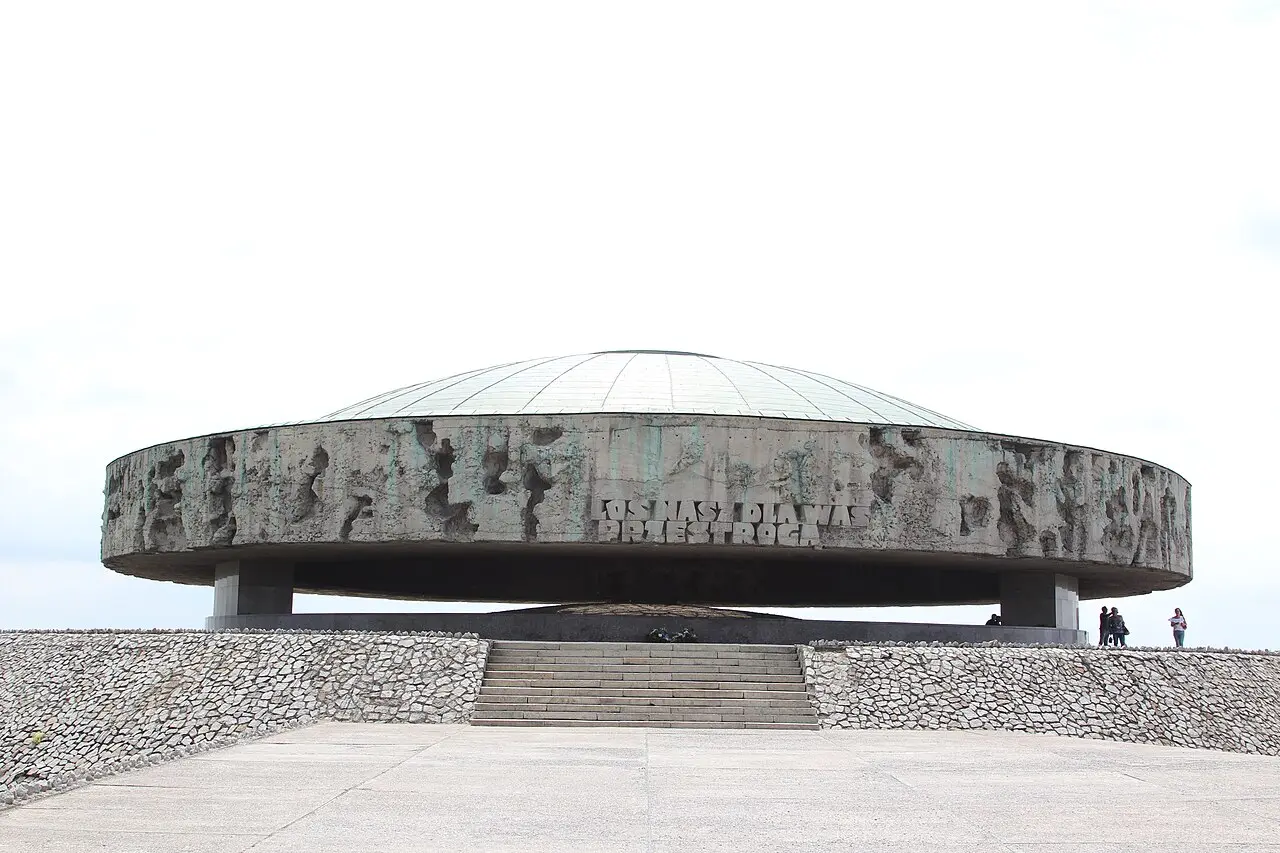
The "Grodzka Gate – NN Theatre" Centre at ul. Grodzka 21 preserves the memory of Jewish Lublin, including through the exhibition "Lublin. Memory of a Place". The State Museum at Majdanek lies on the outskirts of the city.
Sources
- USHMM Photo Archives: View of a street in the Lublin ghetto (event history) Pre-war Jewish population (40,000, about 35%); Lublin 'reservation' plan and 6,300 Jews brought by February 1940; Globocnik's headquarters; ghetto established end of March 1941 after expulsion of about 10,000; deportations from 17 March 1942, about 30,000 deported or killed; Majdan Tatarski 'small ghetto' and deportation to Majdanek; last Jews in the fortress killed July 1944
- Yad Vashem: Yitzhak Arad, "Operation Reinhard": Extermination Camps of Belzec, Sobibor and Treblinka Globocnik in charge of 'Operation Reinhard'; tasks of his Lublin staff; storage of victims' belongings at Lublin's 'old airport'; close to 30,000 of 37,000 ghetto inhabitants deported to Bełżec 17 March–14 April 1942
- Bełżec Museum and Memorial: Timeline First transports to Bełżec came from the Lublin ghetto on 17 March 1942, beginning of 'Aktion Reinhardt'; planning at Globocnik's headquarters in Lublin
- USHMM Holocaust Encyclopedia: Lucine Horn describes conditions in the Lublin ghetto Majdan Tatarski ghetto liquidated in November 1942 (basis for 'autumn 1942')
- Bundesarchiv Gedenkbuch: Chronologie der Deportationen aus dem Deutschen Reich Berlin transports to Piaski (28 March 1942) and Sobibor (13 June 1942); no Berlin transport listed with Lublin as destination
- Statistik des Holocaust: XIV. Transport (Berlin, June 1942) Date 2 June 1942; routing via Lublin to Sobibor; 36 men selected at Lublin for Majdanek, 28 known by name; others presumably murdered in Sobibor
- Stolpersteine in Berlin: Boris Schönhaus 36 of 746 Berlin deportees taken off at Lublin to Majdanek; Boris Schönhaus murdered at Majdanek 16 August 1942
- Bezirksamt Charlottenburg-Wilmersdorf: Stolpersteine Trautenaustr. 8 Train of 2 April 1942 originally planned for Trawniki near Lublin, diverted to Warsaw
- City of Lublin: The Grodzka Gate – NN Theatre Centre The centre, its exhibition 'Lublin. Memory of a Place' and address
- Wikipedia: Lublin Ghetto coordinates