Majdanek (KL Lublin)
Concentration camp, extermination camp, 1941–1944. Today Majdanek, Lublin, Poland.
Majdanek was set up on the outskirts of Lublin after Heinrich Himmler ordered a camp there in July 1941; construction began in October 1941 with Soviet prisoners of war as the first large group of inmates. First called the "Kriegsgefangenenlager der Waffen-SS Lublin" and from February 1943 "Konzentrationslager Lublin", it was subordinate to the SS Economic and Administrative Main Office. It served as a slave-labour camp, a penal and transit camp for Polish rural people and civilians from Belarus, and a place where Jews were imprisoned and murdered.
From the end of March 1942 transports of Jews arrived, among them about 7,000 Slovak Jews and some 2,000 Jews from Bohemia and Moravia selected as workers. Gas chambers using Zyklon B and carbon monoxide were in operation from September or October 1942. In April and May 1943, after the Warsaw Ghetto Uprising, between 18,000 and 22,000 Jews from Warsaw were deported to the camp. On 3 November 1943, in the operation the SS called "Erntefest" ("Harvest Festival"), SS and police units shot about 18,000 Jews from Majdanek and from labour camps in Lublin in ditches beside the camp; USHMM describes it as the largest single-day, single-location massacre of the Holocaust. About 42,000 Jews were killed in the operation as a whole.
The State Museum at Majdanek, drawing on research by Tomasz Kranz, puts the number of dead at about 78,000–80,000, some 59,000–60,000 of them Jews, out of about 130,000 people deported to the camp. USHMM gives a wider estimate of 95,000–130,000 deaths in the Majdanek camp system, 80,000–110,000 of them in the main camp. The SS began evacuating prisoners in April 1944; Soviet forces reached the camp on 23–24 July 1944 and found fewer than 500 prisoners.
From Berlin
No train from Berlin had Majdanek as its sole destination; statistik-des-holocaust.de lists the Berlin transport of June 1942 under "Majdanek/Sobibor". That train (dated 13 June 1942 by the Bundesarchiv, 2 June by statistik-des-holocaust.de) stopped in Lublin, where 36 men were ordered off and taken to Majdanek; 28 of them are known by name. The other deportees, including women and children, were presumably taken on to Sobibor and murdered there.
Boris Schönhaus, born in 1898, was one of the men taken to Majdanek. From the camp he wrote to his family that he had arrived and asked whether they had heard anything of his wife Fanja, who had remained on the train and was presumably murdered on arrival at Sobibor. He was murdered at Majdanek on 16 August 1942.
No transport went directly from Berlin to this place.
The memorial today
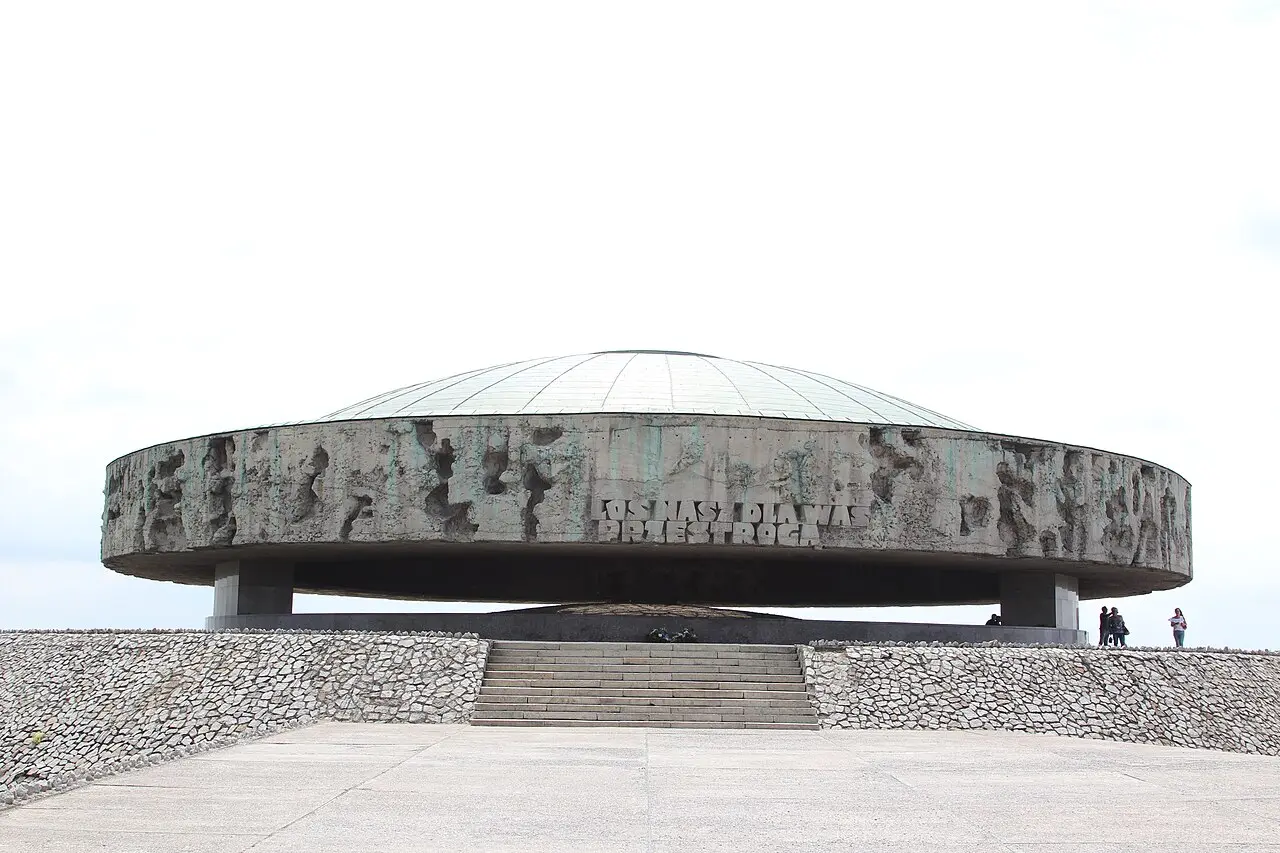
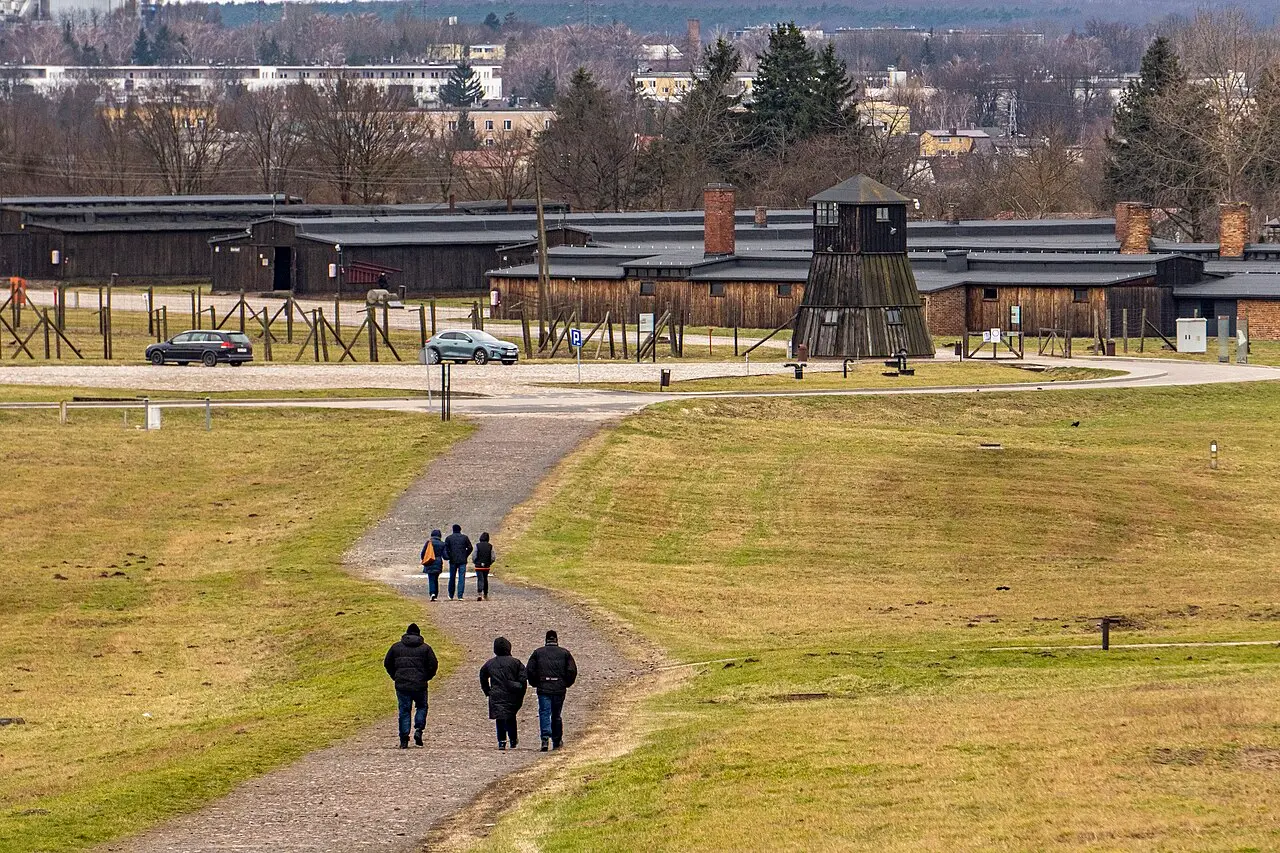
The State Museum at Majdanek, founded in November 1944 as the first memorial at a former concentration camp, preserves original barracks, gas chambers and the crematorium; a mausoleum holds the ashes of victims.
Sources
- State Museum at Majdanek: Brief Outline Official names, subordination to the SS Economic and Administrative Main Office, functions of the camp, about 130,000 deported, about 80,000 dead including about 60,000 Jews, operation until July 1944
- State Museum at Majdanek: Timeline Himmler's order July 1941; construction from October 1941; Soviet POWs; first Slovak Jews 29 March 1942; gas chambers operational September/October 1942; 'Erntefest' 3 November 1943 (18,000); evacuation from April 1944; Soviet entry July 1944
- USHMM Holocaust Encyclopedia: Lublin/Majdanek: Key Dates Slovak and Czech Jews 1942; Zyklon B and carbon monoxide; 18,000–22,000 Warsaw Jews 1943; 'Erntefest' (18,000 shot, largest single-day single-location massacre, about 42,000 in total); liberation 23–24 July 1944, fewer than 500 prisoners; death toll 95,000–130,000
- Auschwitz-Birkenau State Museum: Majdanek victims enumerated Tomasz Kranz's revised figure of about 78,000 victims, about 59,000 of them Jews
- Memorial Museums: State Museum at Majdanek Museum founded November 1944 as the first concentration camp memorial; preserved buildings; mausoleum with ashes; at least 78,000 dead, about 60,000 Jews
- Statistik des Holocaust: XIV. Transport (Berlin, June 1942) Listed as 'Majdanek/Sobibor'; date 2 June 1942; 36 men selected at Lublin for Majdanek, 28 known by name; the others presumably murdered in Sobibor
- Bundesarchiv Gedenkbuch: Chronologie der Deportationen aus dem Deutschen Reich Berlin transport dated 13 June 1942 to Sobibor
- Stolpersteine in Berlin: Boris Schönhaus Born 1898; one of 36 men taken off at Lublin; his message from Majdanek asking about Fanja; Fanja presumably murdered on arrival in Sobibor; murdered at Majdanek 16 August 1942
- Wikipedia: Majdanek concentration camp coordinates