Litzmannstadt (Getto Litzmannstadt)
Ghetto, 1940–1944. Today Łódź, Poland.
German troops occupied Łódź on 8 September 1939; the city was annexed to the Reich and renamed Litzmannstadt. The Germans set up a ghetto in a neglected district in early February 1940 and sealed it on 30 April 1940, confining roughly 160,000 of the city's Jews there. Yad Vashem describes it as a particularly isolated and strictly guarded ghetto. The Jewish council under Mordechai Chaim Rumkowski organised it as a forced-labour economy working for German needs, in the hope that labour would allow the inhabitants to survive.
In 1941 and 1942 almost 40,000 more Jews were deported into the ghetto: about 20,000 from Germany, Austria, the Protectorate of Bohemia and Moravia and Luxembourg, and almost 20,000 from provincial towns in the Warthegau. About 5,000 Roma from Austria were also brought there. Overcrowding, starvation and epidemics were constant; according to Yad Vashem, some 43,500 people, about 21 percent of the ghetto population, died of hunger, cold or disease.
From January 1942 the Germans deported ghetto inmates to the Chełmno (Kulmhof) killing centre, where they were murdered in gas vans. By the end of 1942 almost half of the Jews held in Łódź had been murdered there. In 1944 the ghetto was liquidated: deportations to Chełmno resumed on 23 June, and from 7 August the trains went to Auschwitz-Birkenau (USHMM puts the number sent there in August at about 67,000). The last transport left on 30 August 1944. When the Soviet Army reached Łódź on 19 January 1945, it liberated about 800 Jews.
From Berlin
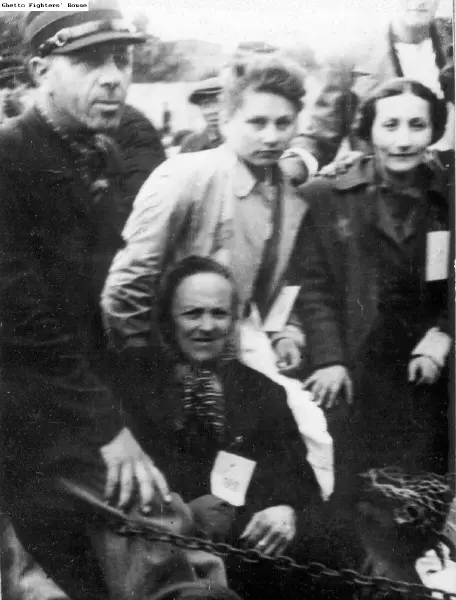
The first four deportation trains from Berlin went to Litzmannstadt, on 18, 24 and 29 October and 1 November 1941. The deportees were first held in the assembly camp in the Levetzowstraße synagogue. They were then taken to Bahnhof Grunewald, many of them on foot across the city, and put into passenger carriages. The Berlin Gestapo burned its files before the end of the war, so exact numbers are uncertain. Yad Vashem gives about 1,013–1,096, 982–1,146, 906–1,009 and 1,033–1,079 people for the four trains. A German police officer recorded on 13 November 1941 that 4,187 Jews from Berlin had arrived in the ghetto. One ghetto diarist wrote that most of those arriving on the second Berlin transport were old and frail.
Between 4 and 15 May 1942 many of the Jews deported from Berlin were taken to Chełmno (Kulmhof) and murdered. According to USHMM, almost 11,000 of the Jews deported to Łódź from Germany, Austria, Prague and Luxembourg were murdered at Chełmno that May. Yad Vashem, citing the historian Rita Meyhöfer, lists only one to four known survivors from each of the four Berlin transports. One of them was Heinz Friedländer, deported at the age of 11. He survived the ghetto and several concentration camps and later became a well-known historian in the United States as Henry Friedlander.
4 transports from Berlin brought 4,207 people here.
Transports from Berlin to Litzmannstadt
| Date | Designation | From | People | Known survivors |
|---|---|---|---|---|
| 18.10.1941 | I. Transport | Bahnhof Grunewald | 1,091 | |
| 24.10.1941 | II. Transport | Bahnhof Grunewald | 1,053 | |
| 29.10.1941 | III. Transport | Bahnhof Grunewald | 1,034 | |
| 01.11.1941 | IV. Transport | Bahnhof Grunewald | 1,029 |
The memorial today
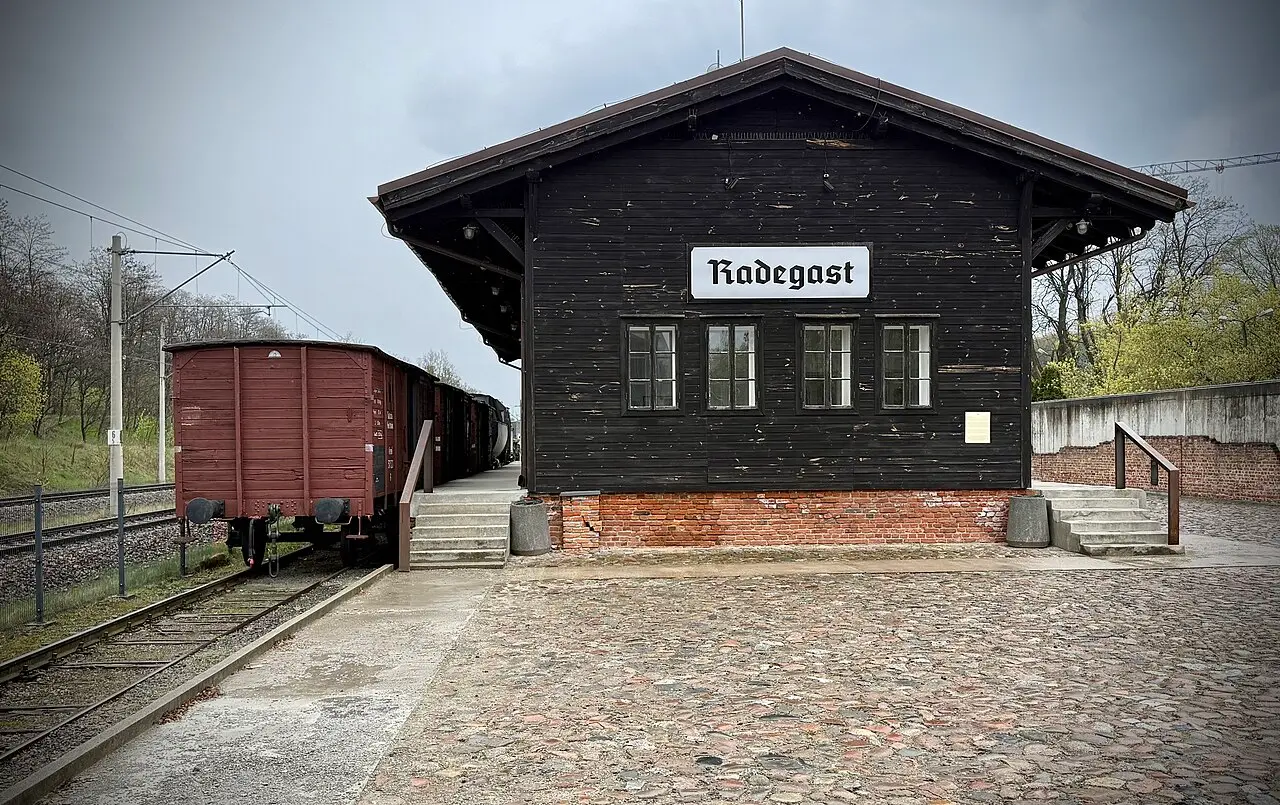
The former Radegast station, from which ghetto inmates were deported to Chełmno and Auschwitz-Birkenau from January 1942, is part of the Litzmannstadt Ghetto Memorial created in 2004. It houses a branch of the Museum of Independence Traditions in Łódź, and its memorial includes a 140-metre “Tunnel of the Deported” displaying transport lists. The site of the Chełmno killing centre has its own museum.
Sources
- USHMM Holocaust Encyclopedia: Lodz Ghetto established February 1940, sealed 30 April 1940; about 160,000 Jews; almost 40,000 deported in 1941–42 incl. 20,000 from Germany/Austria/Protectorate/Luxembourg; 5,000 Roma; about 67,000 sent to Auschwitz in August 1944
- Yad Vashem: The Lodz Ghetto – Historical Background Occupation 8 Sept 1939 and renaming; isolation; Rumkowski and labour strategy; 43,500 deaths (21%); Chełmno deportations from January 1942; liquidation June–August 1944; last transport 30 August 1944; about 800 liberated 19 January 1945
- Yad Vashem, Transports to Extinction: Transport 1 from Berlin to Lodz, 18/10/1941 Departure from Grunewald via Levetzowstraße assembly camp; 1,013–1,096 deportees; burned Gestapo files; murders at Chełmno 4–15 May 1942; survivors per Rita Meyhöfer
- Yad Vashem, Transports to Extinction: Transport 2 from Berlin to Lodz, 24/10/1941 982–1,146 deportees; diary of Shlomo Frank describing mostly elderly arrivals; Heinz (Henry) Friedländer; four known survivors
- Yad Vashem, Transports to Extinction: Transport 3 from Berlin to Lodz, 29/10/1941 906–908 deportees (some books 1,009); one known survivor
- Yad Vashem, Transports to Extinction: Transport 4 from Berlin to Lodz, 01/11/1941 1,033–1,079 deportees; police officer Künzel's note of 13 Nov 1941 that 4,187 Berlin Jews had arrived; four known survivors
- Bezirksamt Charlottenburg-Wilmersdorf (berlin.de): Liste der Deportationszüge aus Berlin von 1941 bis 1945 (after Gottwaldt/Schulle 2005) Dates, departure station Grunewald and numbers of Berlin transports 1–4 to Litzmannstadt
- USHMM Holocaust Encyclopedia: Chelmno Gas vans; almost 11,000 Reich/Luxembourg Jews from Łódź murdered at Chełmno in May 1942; at least 152,000 Jews murdered, likely 152,000–200,000
- Museum of the Former German Kulmhof Death Camp in Chełmno nad Nerem: History of the camp Periods of operation; museum's estimate of about 200,000 victims
- Muzeum Tradycji Niepodległościowych w Łodzi: Oddział Stacja Radegast Deportations from Radegast to Kulmhof and Auschwitz from January 1942; part of the Litzmannstadt Ghetto Memorial created 2004; museum branch
- Marek Edelman Dialogue Center: Radegast Station 140-metre Tunnel of the Deported with transport lists
- Wikipedia: Łódź Ghetto coordinates