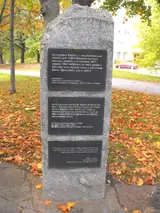
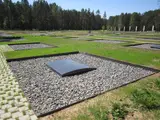
Maly Trostenez (Wald von Blagowschtschina), near Minsk
Killing site, 1942–1944. Today Maly Trostenets (Minsk), Belarus.
Maly Trostenets, a village about ten kilometres south-east of Minsk, was the largest Nazi extermination site in the occupied Soviet Union between spring 1942 and summer 1944. It had three parts: a forced-labour camp on the former “Karl Marx” collective farm, the mass-shooting site in the Blagovshchina forest a few kilometres away, and a site in the Shashkovka forest where bodies were burned on a mass scale. The complex was run by the Commander of the Security Police and SD (KdS) in Minsk, who answered to the Reich Security Main Office (RSHA) in Berlin. Forced labourers in the camp had to clean the gas vans and sort the belongings of the murdered.
Between May and October 1942, Jews deported from the Reich to Minsk, including Vienna, Königsberg, Cologne and Theresienstadt, were no longer admitted to the ghetto. Instead they were taken straight to Blagovshchina and shot at pits or suffocated in gas vans. According to research cited by the GedenkstättenForum, almost 16,000 Jews from the “Altreich” and annexed or occupied territories were murdered in this way under KdS Eduard Strauch. Jews from the Minsk ghetto, Belarusian civilians, partisans, resistance fighters and Soviet prisoners of war were also killed at Maly Trostenets.
From late 1943 the perpetrators had the bodies exhumed and burned to hide their crimes. Shortly before the Red Army arrived in summer 1944, the remaining camp prisoners, more than 100 in all, were murdered in a barn together with over 6,000 other victims. The number of victims is still uncertain. In 1944 the Soviet Extraordinary State Commission estimated about 206,500. Current research cited by the Stiftung Denkmal assumes at least 60,000 people were shot or gassed there.
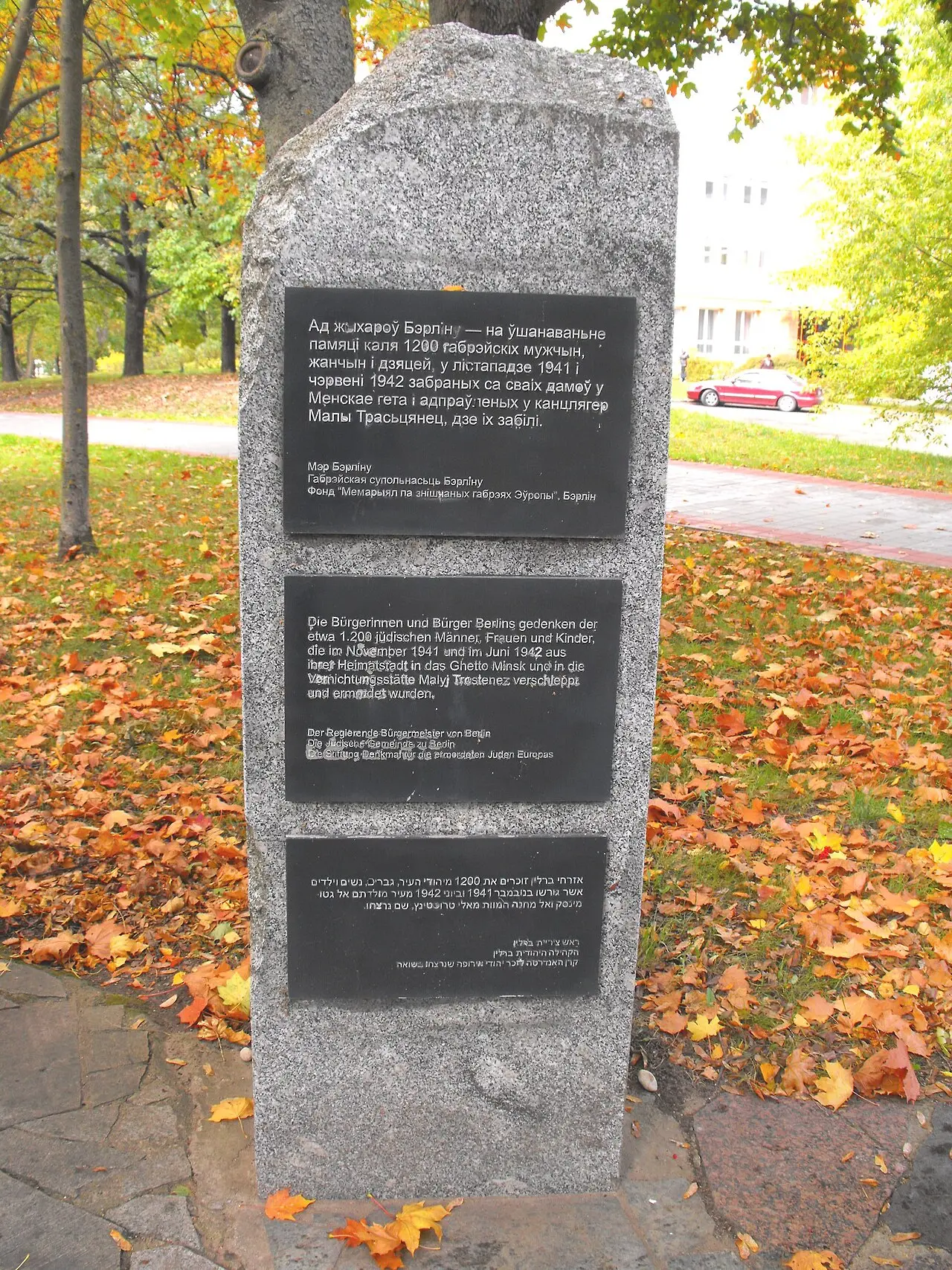
From Berlin
Berlin's 16th “Osttransport”, with about 200 people, left Berlin from Bahnhof Grunewald on 24 June 1942, according to Yad Vashem and the Gottwaldt/Schulle list. The Statistik des Holocaust project dates it to 23 June, based on files of the Oberfinanzpräsident. Its destination is not stated in the surviving records. Yad Vashem and the Statistik des Holocaust project conclude that the Berlin cars were most likely joined at Königsberg to the East Prussian deportation train Da 40, which reached Minsk freight station on 26 June 1942 with 770 Jews. On arrival a small number of men were selected for forced labour. The others were taken by truck to pits in the Blagovshchina forest and shot; some were murdered in gas vans. No survivors are known.
The transport included several dozen employees of the Reichsvereinigung der Juden in Deutschland and their families, among them board member Arthur Lilienthal, Cora Berliner and Paula Fürst. For this reason it is also called a “Straftransport” (“punishment transport”). The Statistik des Holocaust project counts 202 deportees, 198 of them from Berlin. The Berlin memorial book records 201 names.
1 transport from Berlin brought 202 people here.
Transports from Berlin to Maly Trostenez
| Date | Designation | From | People | Known survivors |
|---|---|---|---|---|
| 23.06.1942 | XVI. Transport | Güterbahnhof Moabit | 202 |
The memorial today
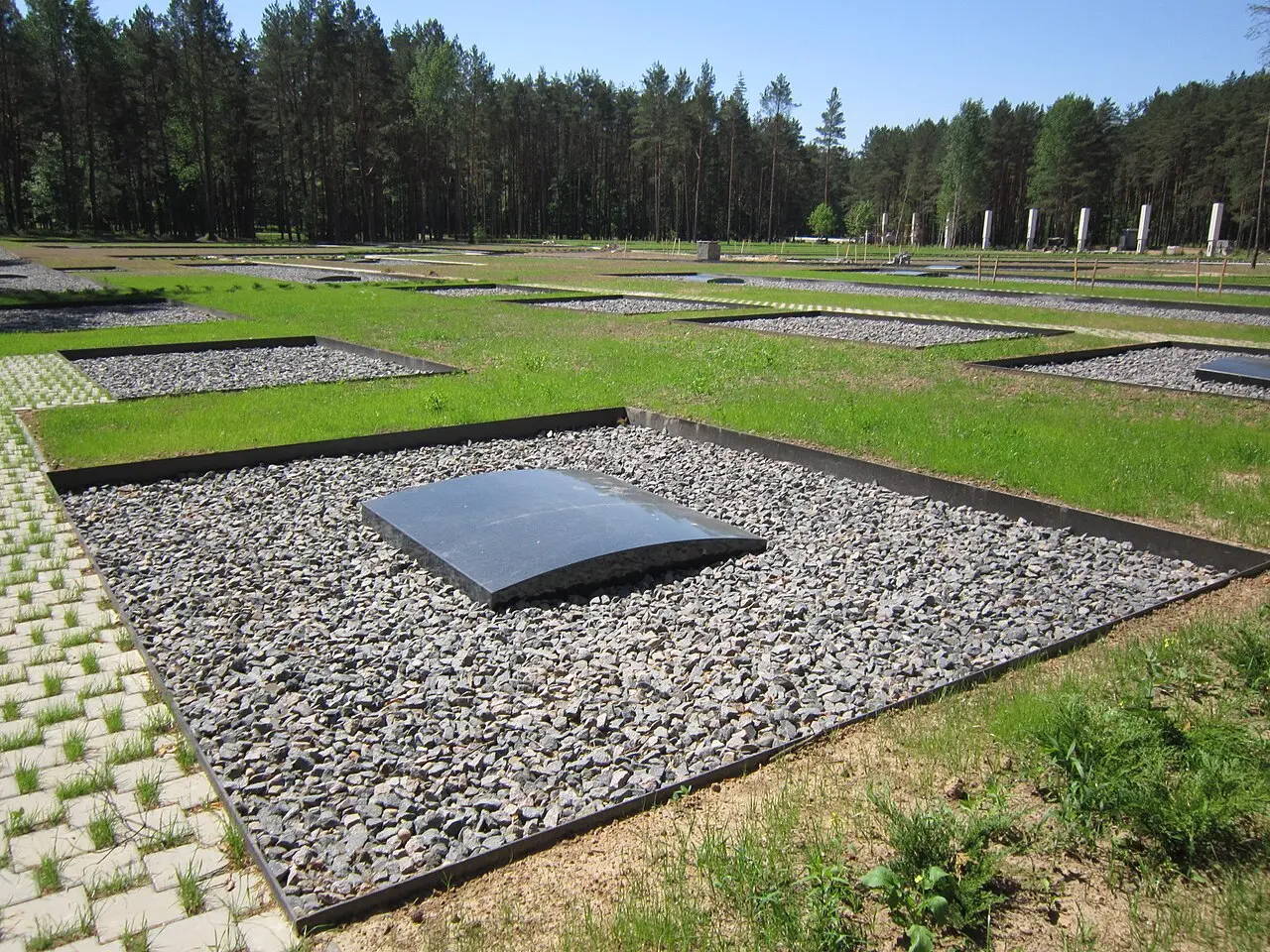
A large memorial complex at Maly Trostenets was inaugurated in 2015. On 29 June 2018 a second section, in the Blagovshchina forest, was opened in the presence of German Federal President Frank-Walter Steinmeier and Belarusian President Alexander Lukashenko.
Sources
- trostenez.org (IBB): Maly Trostenets Extermination Site – History and Remembrance (exhibition) Largest extermination site in occupied USSR, spring 1942–summer 1944; three sections; KdS Minsk under RSHA; forced labourers cleaned gas vans; exhumation and burning from late 1943; final murder of prisoners in a barn with over 6,000 victims; Soviet estimate 206,500; memorial complex inaugurated 2015
- Stiftung Denkmal: Vernichtungsort Malyj Trostenez. Geschichte und Erinnerung (exhibition) Largest extermination site in occupied Soviet territory; victim groups; Soviet estimate of 206,500
- Stiftung Denkmal: Eröffnung der Gedenkanlage im Wald von Blagowschtschina bei Minsk Second section opened 29 June 2018; current research assumes at least 60,000 victims
- Der Bundespräsident: Opening of the Maly Trostenets memorial site (29 June 2018) Steinmeier and Lukashenko at the opening of the second section
- Anja Reuss / Kristin Schneider: Das Ghetto Minsk und die Vernichtungsstätte Maly Trostenez (GedenkstättenForum) About 10 km south-east of Minsk; from May 1942 deportees murdered on arrival; almost 16,000 Reich Jews murdered under Eduard Strauch; ca. 200 Berliners via Königsberg in June 1942
- Yad Vashem, Transports to Extinction: Transport 16 from Berlin to Maly Trostenets, 24/06/1942 Departure from Grunewald 24 June 1942; probable link to Königsberg train Da 40, arrival Minsk 26 June with 770 Jews; selection of a few men; shootings at Blagovshchina and gas vans; Reichsvereinigung staff; 201 names, no survivors listed
- Statistik des Holocaust: XVI. Transport (Berlin) Departure dated 23.06.1942; 202 deportees, 198 from Berlin; Reichsvereinigung staff incl. Lilienthal, Berliner, Fürst; 'Straftransport'; destination not definitively established, probably attached to the East Prussian train reaching Minsk 26.06.1942
- Bezirksamt Charlottenburg-Wilmersdorf (berlin.de): Liste der Deportationszüge aus Berlin von 1941 bis 1945 (after Gottwaldt/Schulle 2005) Transport 16: 24.06.1942, 202 people, arrival 26.06.1942 Minsk
- Wikipedia: Maly Trostenets concentration camp coordinates (camp site; the Blagovshchina shooting site lies a few kilometres away)